


Innovation Watch - Latest UM Patents (2026-09-14)
Control method, control system, control device and controller of parallel converter [Granted Patent]
並聯變流器的控制方法、系統、裝置及控制器 [授權專利]
Publication No.:
CN114784819B
Publication Date:
2026-09-11
Applicant(s):
澳門大學; University of Macau
Inventor(s):
黃民聰;龐營; Huang, Mincong; Pang, Ying
Technology Field(s):
電機、設備、能源 Electrical machinery, apparatus, energy
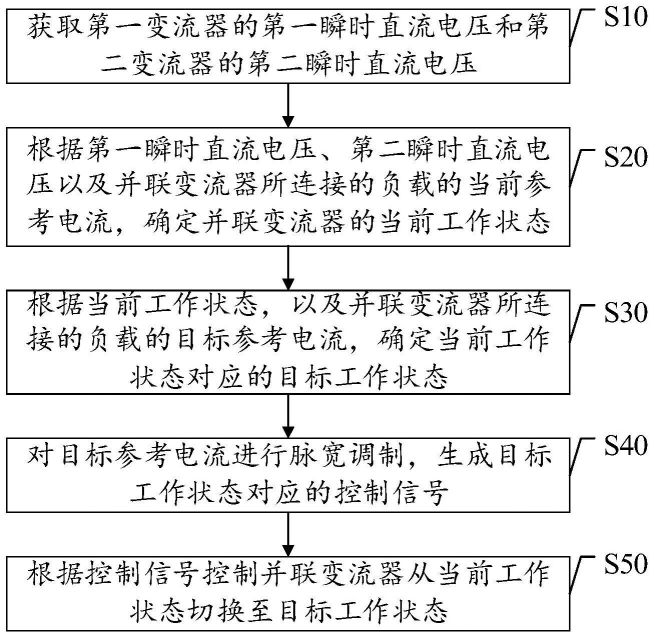
The present application provides a control method, system, apparatus, and controller for parallel-connected converters, relating to the technical field of converters. The method includes: acquiring a first instantaneous DC voltage of a first converter and a second instantaneous DC voltage of a second converter; determining a current operating state of the parallel-connected converters based on the first instantaneous DC voltage, the second instantaneous DC voltage, and a current reference current of a load connected to the parallel-connected converters; determining, based on the current operating state and a target reference current of the load, a target operating state corresponding to the current operating state; performing pulse-width modulation on the target reference current to generate a control signal corresponding to the target operating state; and controlling the parallel-connected converters, based on the control signal, to switch from the current operating state to the target operating state. The present application enables the parallel-connected converters to operate in an optimal operating state according to load conditions.
Publication No.:
CN114784819B
Publication Date:
2026-09-11
Applicant(s):
澳門大學; University of Macau
Inventor(s):
黃民聰;龐營; Huang, Mincong; Pang, Ying
Technology Field(s):
電機、設備、能源 Electrical machinery, apparatus, energy
The present application provides a control method, system, apparatus, and controller for parallel-connected converters, relating to the technical field of converters. The method includes: acquiring a first instantaneous DC voltage of a first converter and a second instantaneous DC voltage of a second converter; determining a current operating state of the parallel-connected converters based on the first instantaneous DC voltage, the second instantaneous DC voltage, and a current reference current of a load connected to the parallel-connected converters; determining, based on the current operating state and a target reference current of the load, a target operating state corresponding to the current operating state; performing pulse-width modulation on the target reference current to generate a control signal corresponding to the target operating state; and controlling the parallel-connected converters, based on the control signal, to switch from the current operating state to the target operating state. The present application enables the parallel-connected converters to operate in an optimal operating state according to load conditions.
The present invention relates to carbon nano-dot composite amino acid reagent and its preparation method and application [Granted Patent]
碳納米點複合氨基酸試劑及其製備方法和應用 [授權專利]
Publication No.:
CN116120917B
Publication Date:
2026-09-11
Applicant(s):
澳門大學; University of Macau
Inventor(s):
曲松楠;王黎明;湯子康; Qu, Songnan; Wang, Liming; Tang, Zikang
Technology Field(s):
製藥;基礎材料化學;微結構與奈米技術;測量 Pharmaceuticals; Basic materials chemistry; Micro-structural and nano-technology; Measurement
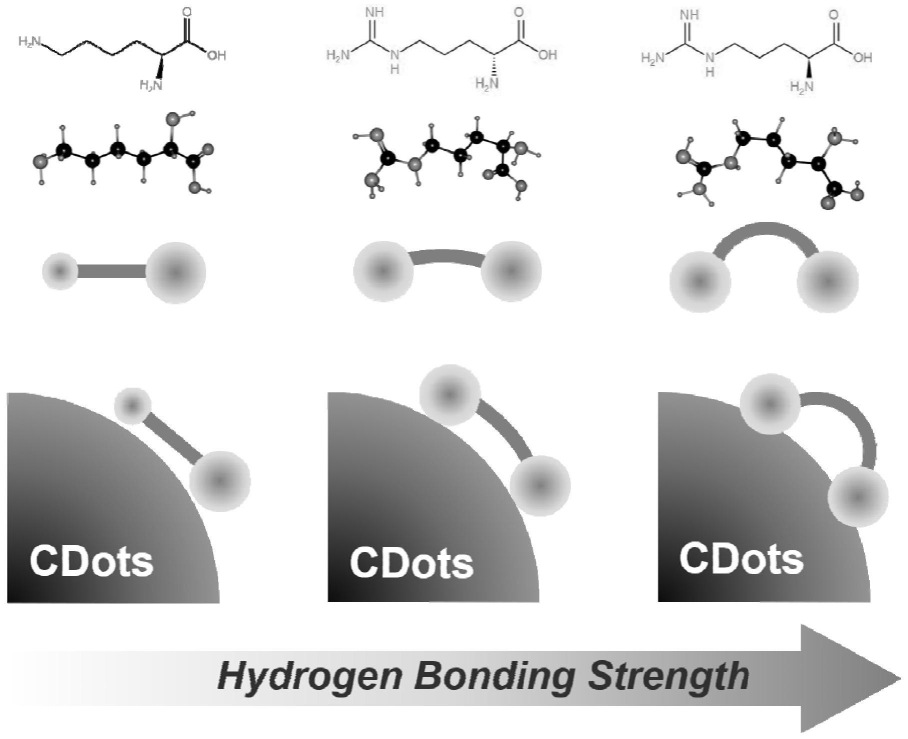
The present invention discloses a carbon nanodot–amino acid composite reagent, as well as a preparation method and use thereof. The carbon nanodot–amino acid composite reagent comprises carbon nanodots and amino acids composited with each other, wherein the surfaces of the carbon nanodots are provided with electron-withdrawing groups. By compositing amino acids with carbon nanodots having electron-withdrawing groups on their surfaces, the two are bonded through hydrogen bonds to form the carbon nanodot–amino acid reagent, without requiring a complicated purification procedure. The reagent possesses the properties of both amino acids and carbon dots, readily binds to cell membranes and penetrates cells, and thereby facilitates cellular uptake. After compositing, the reagent exhibits a relatively high fluorescence quantum yield in aqueous solution and can be used for biological imaging. In addition, the carbon nanodot–amino acid reagent can effectively reduce the amount of fat in cells and in vivo, thereby achieving a weight-loss effect.
Publication No.:
CN116120917B
Publication Date:
2026-09-11
Applicant(s):
澳門大學; University of Macau
Inventor(s):
曲松楠;王黎明;湯子康; Qu, Songnan; Wang, Liming; Tang, Zikang
Technology Field(s):
製藥;基礎材料化學;微結構與奈米技術;測量 Pharmaceuticals; Basic materials chemistry; Micro-structural and nano-technology; Measurement
The present invention discloses a carbon nanodot–amino acid composite reagent, as well as a preparation method and use thereof. The carbon nanodot–amino acid composite reagent comprises carbon nanodots and amino acids composited with each other, wherein the surfaces of the carbon nanodots are provided with electron-withdrawing groups. By compositing amino acids with carbon nanodots having electron-withdrawing groups on their surfaces, the two are bonded through hydrogen bonds to form the carbon nanodot–amino acid reagent, without requiring a complicated purification procedure. The reagent possesses the properties of both amino acids and carbon dots, readily binds to cell membranes and penetrates cells, and thereby facilitates cellular uptake. After compositing, the reagent exhibits a relatively high fluorescence quantum yield in aqueous solution and can be used for biological imaging. In addition, the carbon nanodot–amino acid reagent can effectively reduce the amount of fat in cells and in vivo, thereby achieving a weight-loss effect.
An electrocatalyst, its preparation method and application [Granted Patent]
一種電催化劑、其製備方法和應用 [授權專利]
Publication No.:
CN116334685B
Publication Date:
2026-09-11
Applicant(s):
澳門大學; University of Macau
Inventor(s):
潘暉;劉春發;劉宏超; Pan, Hui; Liu, Chunfa; Liu, Hongchao
Technology Field(s):
表面技術、塗層 Surface technology, coating
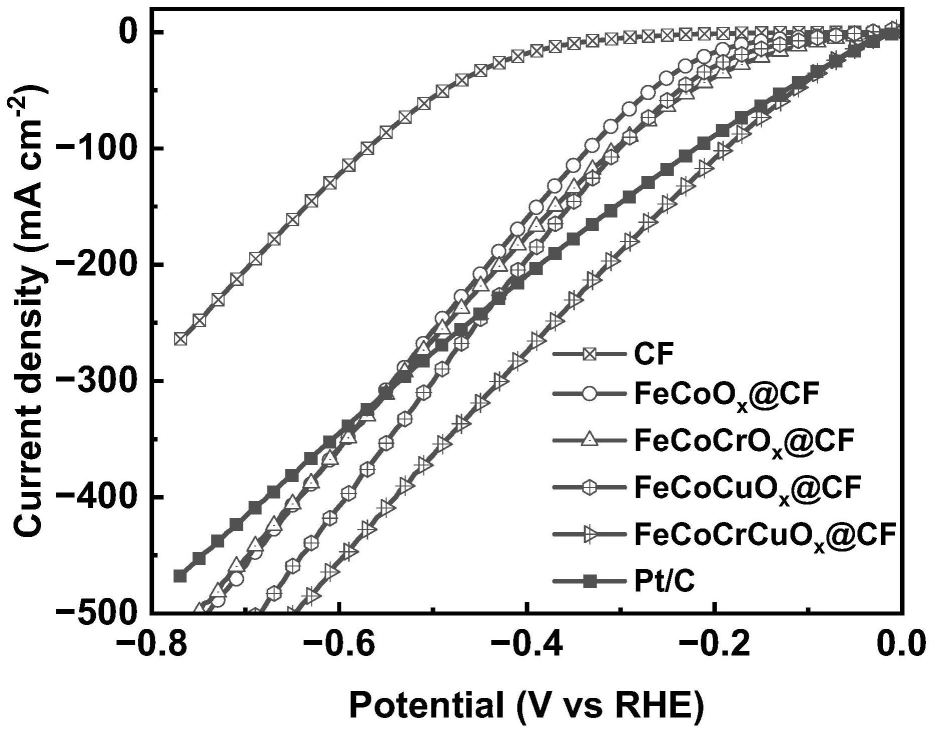
The present invention discloses an electrocatalyst, a preparation method therefor, and use thereof, relating to the field of electrocatalytic technology. The electrocatalyst is prepared by loading a multimetal oxide onto a foam substrate, wherein the metal elements of the multimetal oxide include Fe, Co, Cr, and Cu. By leveraging the synergistic effects among the multiple metals and the strong interaction between Cu and Cr during dissolution and electrodeposition, FeCoCrCuO_x_@CF exhibits outstanding catalytic activity for the hydrogen evolution reaction (HER). The electrocatalyst enables efficient and stable water electrolysis at high current densities, demonstrates excellent long-term stability for HER, and shows promising application prospects in large-scale water-electrolysis hydrogen-production systems.
Publication No.:
CN116334685B
Publication Date:
2026-09-11
Applicant(s):
澳門大學; University of Macau
Inventor(s):
潘暉;劉春發;劉宏超; Pan, Hui; Liu, Chunfa; Liu, Hongchao
Technology Field(s):
表面技術、塗層 Surface technology, coating
The present invention discloses an electrocatalyst, a preparation method therefor, and use thereof, relating to the field of electrocatalytic technology. The electrocatalyst is prepared by loading a multimetal oxide onto a foam substrate, wherein the metal elements of the multimetal oxide include Fe, Co, Cr, and Cu. By leveraging the synergistic effects among the multiple metals and the strong interaction between Cu and Cr during dissolution and electrodeposition, FeCoCrCuO_x_@CF exhibits outstanding catalytic activity for the hydrogen evolution reaction (HER). The electrocatalyst enables efficient and stable water electrolysis at high current densities, demonstrates excellent long-term stability for HER, and shows promising application prospects in large-scale water-electrolysis hydrogen-production systems.
The present invention relates to air-conditioning control method and electronic equipment for meeting requirements of electric network and user’s will [Granted Patent]
面向電網需求及用戶意願的空調控制方法及電子設備 [授權專利]
Publication No.:
CN119826324B
Publication Date:
2026-09-11
Applicant(s):
澳門大學; University of Macau
Inventor(s):
惠紅勳;陳倫澍; Hui, Hongxun; Chen, Lunshu
Technology Field(s):
熱過程和設備;電腦技術 Thermal processes and apparatus; Computer technology
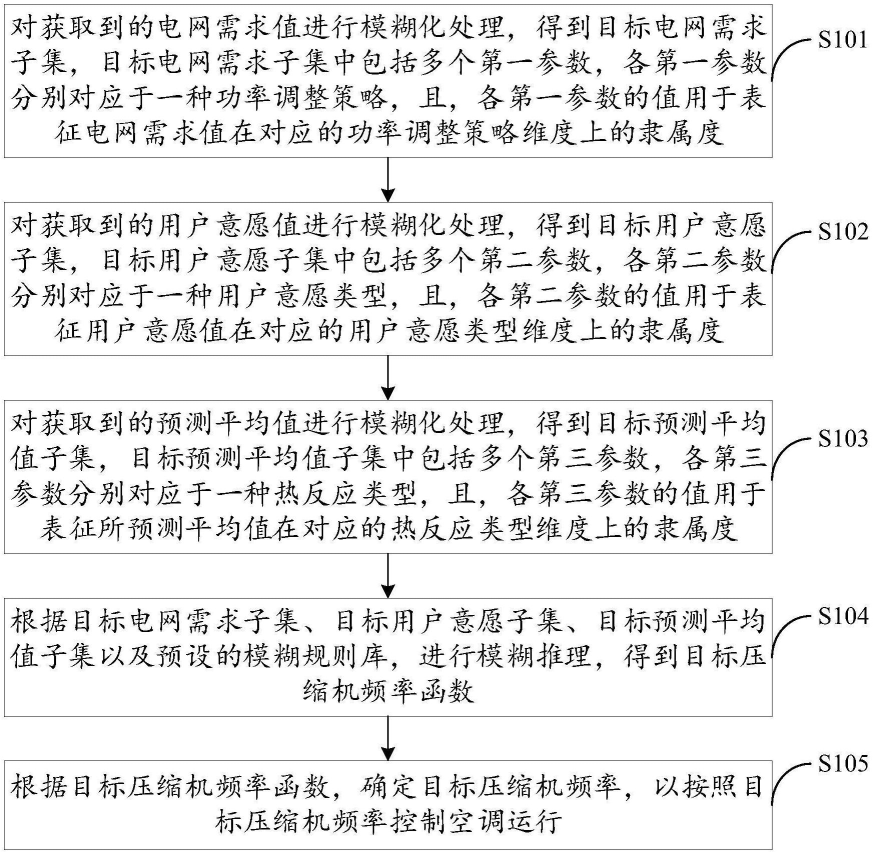
The present application provides an air-conditioner control method and an electronic device responsive to grid demand and user preference. The method includes: fuzzifying an acquired grid-demand value to obtain a target grid-demand subset; fuzzifying an acquired user-preference value to obtain a target user-preference subset; and fuzzifying an acquired predicted mean vote value to obtain a target predicted mean vote subset. Fuzzy inference is then performed according to the target grid-demand subset, the target user-preference subset, the target predicted mean vote subset, and a preset fuzzy-rule base, thereby obtaining a target compressor-frequency function. A target compressor frequency is determined based on the target compressor-frequency function, and the air conditioner is controlled to operate at the target compressor frequency. By comprehensively considering grid demand, user preference, and predicted mean vote for thermal comfort from both the power-supply side and the user side, the method controls air-conditioner operation in a manner that improves power-system flexibility and helps ensure stable operation of the power system.
Publication No.:
CN119826324B
Publication Date:
2026-09-11
Applicant(s):
澳門大學; University of Macau
Inventor(s):
惠紅勳;陳倫澍; Hui, Hongxun; Chen, Lunshu
Technology Field(s):
熱過程和設備;電腦技術 Thermal processes and apparatus; Computer technology
The present application provides an air-conditioner control method and an electronic device responsive to grid demand and user preference. The method includes: fuzzifying an acquired grid-demand value to obtain a target grid-demand subset; fuzzifying an acquired user-preference value to obtain a target user-preference subset; and fuzzifying an acquired predicted mean vote value to obtain a target predicted mean vote subset. Fuzzy inference is then performed according to the target grid-demand subset, the target user-preference subset, the target predicted mean vote subset, and a preset fuzzy-rule base, thereby obtaining a target compressor-frequency function. A target compressor frequency is determined based on the target compressor-frequency function, and the air conditioner is controlled to operate at the target compressor frequency. By comprehensively considering grid demand, user preference, and predicted mean vote for thermal comfort from both the power-supply side and the user side, the method controls air-conditioner operation in a manner that improves power-system flexibility and helps ensure stable operation of the power system.
A frequency conversion air conditioner control method and equipment for power distribution network voltage regulation [Granted Patent]
一種面向配電網電壓調節的變頻空調控制方法及設備 [授權專利]
Publication No.:
CN119891404B
Publication Date:
2026-09-11
Applicant(s):
澳門大學; University of Macau
Inventor(s):
惠紅勳;陳倫澍; Hui, Hongxun; Chen, Lunshu
Technology Field(s):
電機、設備、能源 Electrical machinery, apparatus, energy
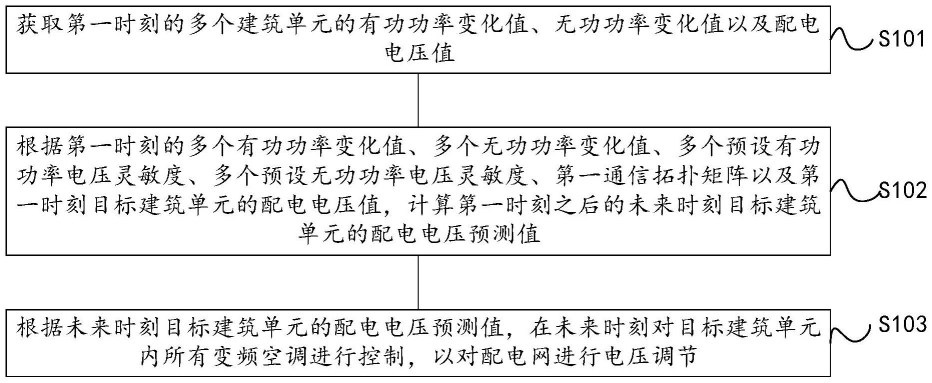
The present application provides a variable-frequency air-conditioner control method and apparatus for distribution-network voltage regulation, relating to the field of electric-power control technology. The method includes acquiring, at a first time point, active-power variation values, reactive-power variation values, and distribution-voltage values for a plurality of building units. Based on the plurality of active-power variation values, the plurality of reactive-power variation values, a plurality of preset active-power-to-voltage sensitivities, a plurality of preset reactive-power-to-voltage sensitivities, a first communication-topology matrix, and a distribution-voltage value of a target building unit at the first time point, a predicted distribution-voltage value of the target building unit at a future time point after the first time point is calculated. Based on the predicted distribution-voltage value of the target building unit at the future time point, all variable-frequency air conditioners in the target building unit are controlled at the future time point to regulate the voltage of the distribution network. Accordingly, by regulating the power consumption of the variable-frequency air conditioners, the method enables the integration of a greater amount of renewable-energy generation, promotes the large-scale utilization of renewable energy, and avoids energy waste.
Publication No.:
CN119891404B
Publication Date:
2026-09-11
Applicant(s):
澳門大學; University of Macau
Inventor(s):
惠紅勳;陳倫澍; Hui, Hongxun; Chen, Lunshu
Technology Field(s):
電機、設備、能源 Electrical machinery, apparatus, energy
The present application provides a variable-frequency air-conditioner control method and apparatus for distribution-network voltage regulation, relating to the field of electric-power control technology. The method includes acquiring, at a first time point, active-power variation values, reactive-power variation values, and distribution-voltage values for a plurality of building units. Based on the plurality of active-power variation values, the plurality of reactive-power variation values, a plurality of preset active-power-to-voltage sensitivities, a plurality of preset reactive-power-to-voltage sensitivities, a first communication-topology matrix, and a distribution-voltage value of a target building unit at the first time point, a predicted distribution-voltage value of the target building unit at a future time point after the first time point is calculated. Based on the predicted distribution-voltage value of the target building unit at the future time point, all variable-frequency air conditioners in the target building unit are controlled at the future time point to regulate the voltage of the distribution network. Accordingly, by regulating the power consumption of the variable-frequency air conditioners, the method enables the integration of a greater amount of renewable-energy generation, promotes the large-scale utilization of renewable energy, and avoids energy waste.
Training method of energy consumption probability prediction model, energy consumption probability prediction method, computer equipment and readable storage medium [Granted Patent]
能耗概率預測模型的訓練方法、能耗概率預測方法、計算機設備及可讀存儲介質 [授權專利]
Publication No.:
CN120596908B
Publication Date:
2026-09-11
Applicant(s):
澳門大學; University of Macau
Inventor(s):
惠紅勳;蔣思宇;宋永華; Hui, Hongxun; Jiang, Siyu; Song, Yonghua
Technology Field(s):
電腦技術 Computer technology
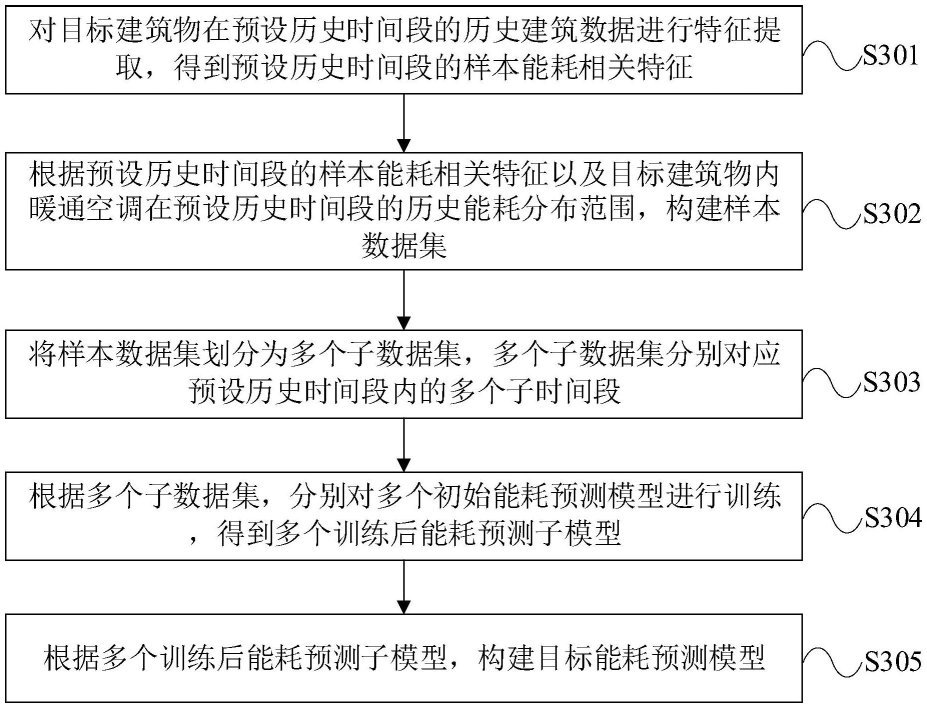
The present application provides a method for training an energy-consumption probability prediction model, an energy-consumption probability prediction method, a computer device, and a readable storage medium, relating to the technical fields of building energy management and intelligent prediction. The method includes: extracting features from historical building data of a target building over a preset historical period to obtain sample energy-consumption-related features; constructing a sample dataset based on the sample energy-consumption-related features and actual energy-consumption probabilities; dividing the sample dataset into a plurality of sub-datasets; separately training a plurality of initial energy-consumption prediction models based on the plurality of sub-datasets to obtain a plurality of trained energy-consumption prediction sub-models; and constructing a target energy-consumption prediction model based on the plurality of trained energy-consumption prediction sub-models. According to the present application, the target energy-consumption prediction model is obtained based on energy-consumption-related features from multiple samples, thereby providing high prediction-interval coverage and adaptability to dynamic load variations, and consequently meeting the need for accurate prediction of building energy consumption.
Publication No.:
CN120596908B
Publication Date:
2026-09-11
Applicant(s):
澳門大學; University of Macau
Inventor(s):
惠紅勳;蔣思宇;宋永華; Hui, Hongxun; Jiang, Siyu; Song, Yonghua
Technology Field(s):
電腦技術 Computer technology
The present application provides a method for training an energy-consumption probability prediction model, an energy-consumption probability prediction method, a computer device, and a readable storage medium, relating to the technical fields of building energy management and intelligent prediction. The method includes: extracting features from historical building data of a target building over a preset historical period to obtain sample energy-consumption-related features; constructing a sample dataset based on the sample energy-consumption-related features and actual energy-consumption probabilities; dividing the sample dataset into a plurality of sub-datasets; separately training a plurality of initial energy-consumption prediction models based on the plurality of sub-datasets to obtain a plurality of trained energy-consumption prediction sub-models; and constructing a target energy-consumption prediction model based on the plurality of trained energy-consumption prediction sub-models. According to the present application, the target energy-consumption prediction model is obtained based on energy-consumption-related features from multiple samples, thereby providing high prediction-interval coverage and adaptability to dynamic load variations, and consequently meeting the need for accurate prediction of building energy consumption.
An engineering bacterium for treating inflammatory bowel disease and its application
一種治療炎症性腸病的工程菌及其應用
Publication No.:
CN122727118A
Publication Date:
2026-09-11
Applicant(s):
澳門大學; University of Macau
Inventor(s):
陳新;王一如; Chen, Xin; Wang, Yiru
Technology Field(s):
生物技術;製藥 Biotechnology; Pharmaceuticals
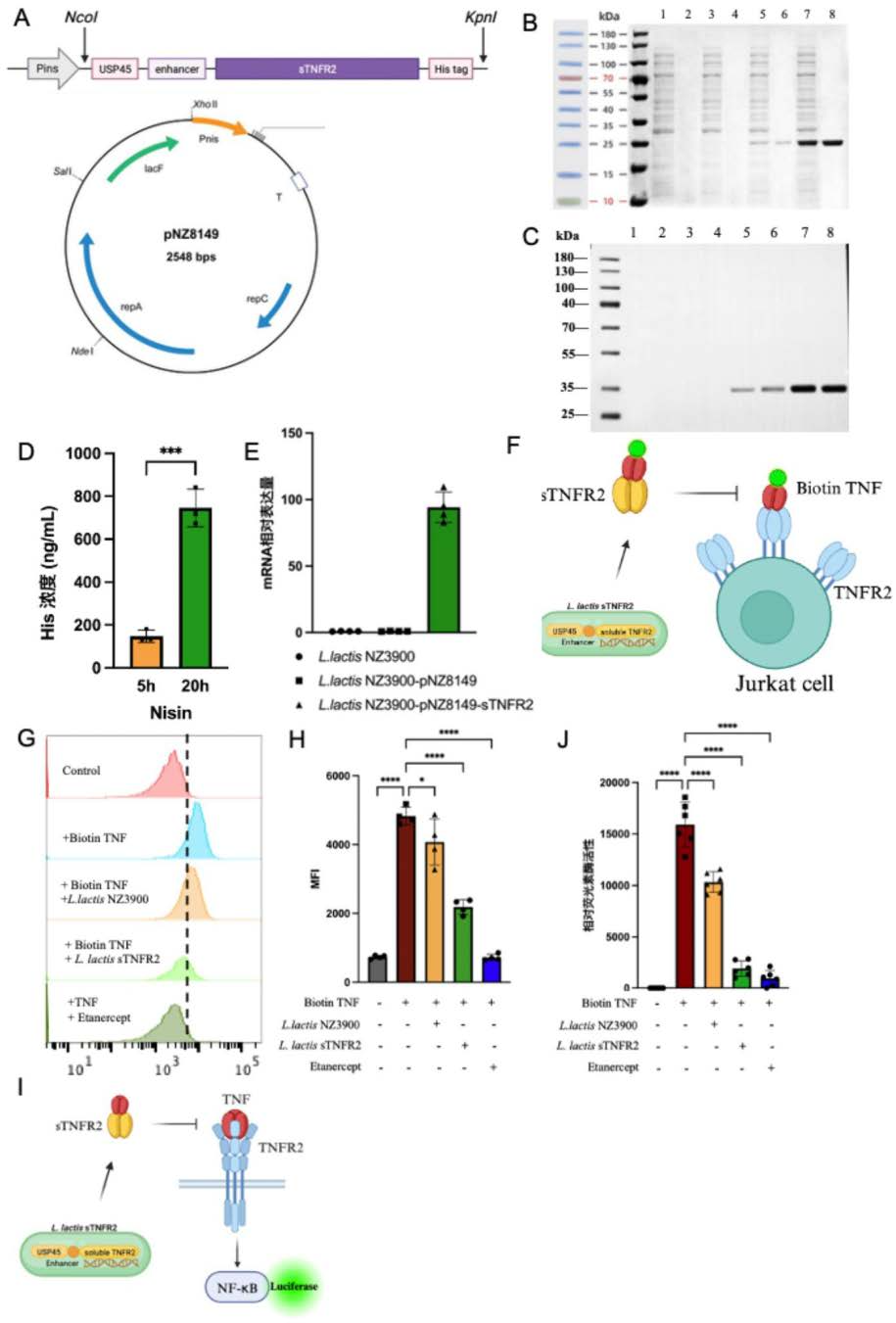
The present invention relates to the field of biomedicine and, more particularly, to an engineered bacterium for treating inflammatory bowel disease and use thereof. The invention discloses an engineered Lactococcus lactis NZ3900 capable of secreting soluble TNFR2 (sTNFR2), which can be used for treating inflammatory bowel disease. Specifically: (1) the food-grade engineered Lactococcus lactis NZ3900 secretes sTNFR2 upon induction with nisin; (2) sTNFR2 secreted by the engineered Lactococcus lactis NZ3900 can bind TNF and downregulate downstream NF-κB signaling through TNF binding; and (3) the engineered bacterium can alleviate dextran sulfate sodium (DSS)-induced colitis, reduce inflammation, and accelerate restoration of the intestinal barrier. The invention offers advantages including simple operation, low cost, and stable and reliable efficacy. Establishment of the method provides an important basis for producing anti-TNF drugs in large quantities that are affordable, safe, and effective.
Publication No.:
CN122727118A
Publication Date:
2026-09-11
Applicant(s):
澳門大學; University of Macau
Inventor(s):
陳新;王一如; Chen, Xin; Wang, Yiru
Technology Field(s):
生物技術;製藥 Biotechnology; Pharmaceuticals
The present invention relates to the field of biomedicine and, more particularly, to an engineered bacterium for treating inflammatory bowel disease and use thereof. The invention discloses an engineered Lactococcus lactis NZ3900 capable of secreting soluble TNFR2 (sTNFR2), which can be used for treating inflammatory bowel disease. Specifically: (1) the food-grade engineered Lactococcus lactis NZ3900 secretes sTNFR2 upon induction with nisin; (2) sTNFR2 secreted by the engineered Lactococcus lactis NZ3900 can bind TNF and downregulate downstream NF-κB signaling through TNF binding; and (3) the engineered bacterium can alleviate dextran sulfate sodium (DSS)-induced colitis, reduce inflammation, and accelerate restoration of the intestinal barrier. The invention offers advantages including simple operation, low cost, and stable and reliable efficacy. Establishment of the method provides an important basis for producing anti-TNF drugs in large quantities that are affordable, safe, and effective.
A microporous molecular sieve supported CuOx cluster electrocatalyst and its preparation method and application
一種微孔分子篩負載CuOx簇電催化劑及其製備方法和應用
Publication No.:
CN122727836A
Publication Date:
2026-09-11
Applicant(s):
橫琴粵澳深度合作區澳門大學高等研究院(橫琴澳門大學高等研究院); University of Macau Advanced Research Institute in Hengqin (HUMRI)
Inventor(s):
許冠南;曹雷; Xu, Guannan; Cao, Lei
Technology Field(s):
表面技術、塗層 Surface technology, coating
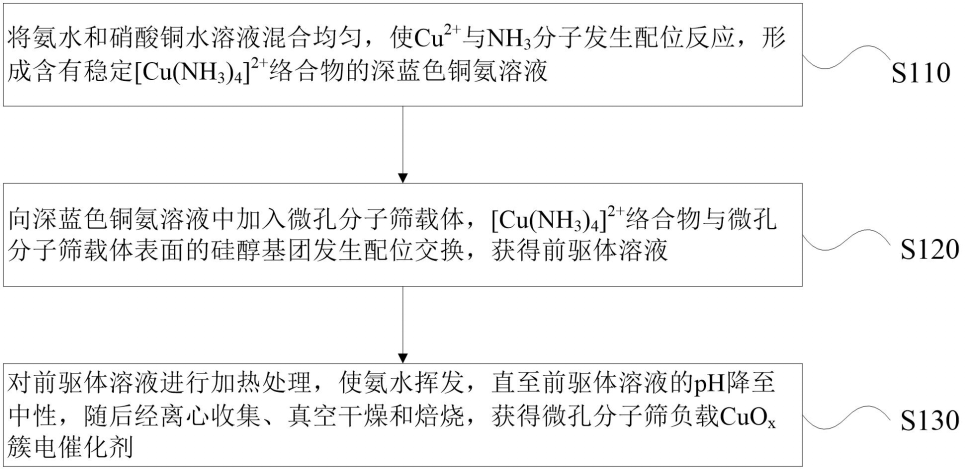
The present invention provides a microporous molecular sieve-supported CuOx cluster electrocatalyst, along with a preparation method and application thereof, wherein the preparation method comprises: uniformly mixing aqueous ammonia and an aqueous copper nitrate solution, such that Cu2+ undergoes a coordination reaction with NH3 molecules to form a cuprammonium solution containing stable [Cu(NH3)4]2+ complexes; adding a microporous molecular sieve support into the cuprammonium solution, wherein the [Cu(NH3)4]2+ complexes undergo coordination exchange with silanol groups on the surface of the microporous molecular sieve support to obtain a precursor solution; and heating the precursor solution to volatilize ammonia until the pH drops to neutral, followed by centrifugal collection, vacuum drying, and calcination to obtain the microporous molecular sieve-supported CuOx cluster electrocatalyst. The electrocatalyst of the present invention features highly dispersed copper species, an intact molecular sieve pore structure, and high active-site utilization efficiency, exhibiting excellent catalytic performance in the electroreduction of CO2 to produce C2+ products.
Publication No.:
CN122727836A
Publication Date:
2026-09-11
Applicant(s):
橫琴粵澳深度合作區澳門大學高等研究院(橫琴澳門大學高等研究院); University of Macau Advanced Research Institute in Hengqin (HUMRI)
Inventor(s):
許冠南;曹雷; Xu, Guannan; Cao, Lei
Technology Field(s):
表面技術、塗層 Surface technology, coating
The present invention provides a microporous molecular sieve-supported CuOx cluster electrocatalyst, along with a preparation method and application thereof, wherein the preparation method comprises: uniformly mixing aqueous ammonia and an aqueous copper nitrate solution, such that Cu2+ undergoes a coordination reaction with NH3 molecules to form a cuprammonium solution containing stable [Cu(NH3)4]2+ complexes; adding a microporous molecular sieve support into the cuprammonium solution, wherein the [Cu(NH3)4]2+ complexes undergo coordination exchange with silanol groups on the surface of the microporous molecular sieve support to obtain a precursor solution; and heating the precursor solution to volatilize ammonia until the pH drops to neutral, followed by centrifugal collection, vacuum drying, and calcination to obtain the microporous molecular sieve-supported CuOx cluster electrocatalyst. The electrocatalyst of the present invention features highly dispersed copper species, an intact molecular sieve pore structure, and high active-site utilization efficiency, exhibiting excellent catalytic performance in the electroreduction of CO2 to produce C2+ products.
An electrocatalyst and its preparation method and application
一種電催化劑及其製備方法和應用
Publication No.:
CN122727849A
Publication Date:
2026-09-11
Applicant(s):
澳門大學; University of Macau
Inventor(s):
潘暉;王娟娟;王雙鵬; Pan, Hui; Wang, Juanjuan; Wang, Shuangpeng
Technology Field(s):
表面技術、塗層 Surface technology, coating
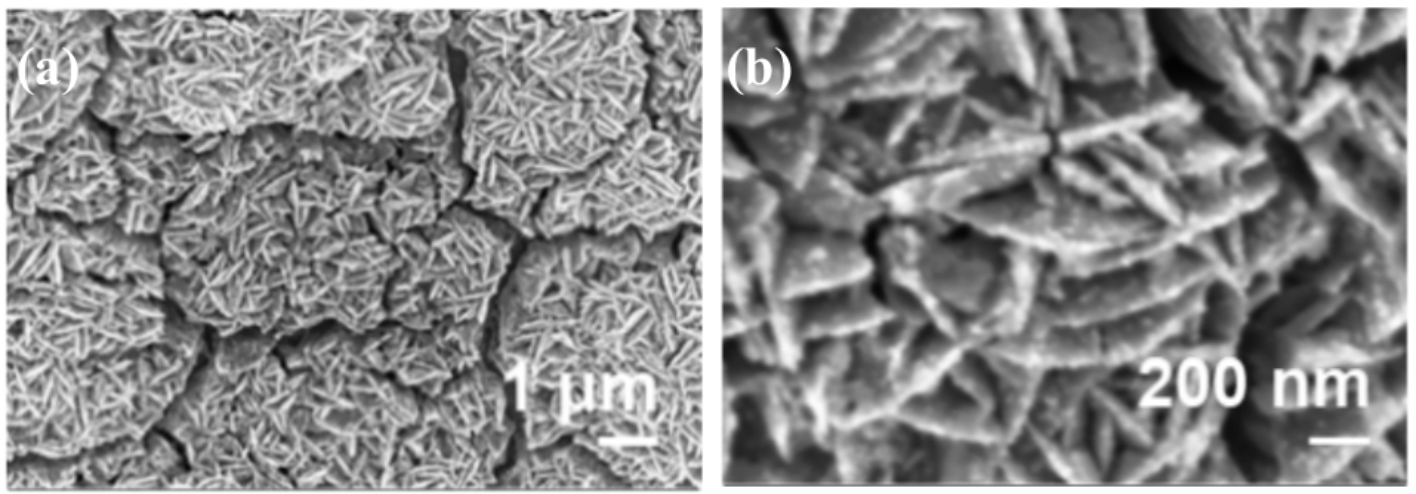
The present invention relates to the field of electrolytic water splitting for hydrogen production and discloses an electrocatalyst, as well as a preparation method and use thereof. The preparation method comprises the following steps: in the presence of a conductive substrate, subjecting an aqueous solution containing a molybdenum source, a cobalt source, and a fluorine source to a hydrothermal reaction; thermally treating the resulting product under a hydrogen-containing reducing atmosphere to obtain an MoO₂/CoMoO₃ composite structure supported on the conductive substrate; and performing in situ electrochemical reconstruction of the supported MoO₂/CoMoO₃ composite structure in an alkaline electrolyte to obtain the electrocatalyst. The present invention addresses the drawbacks of conventional non-noble-metal catalysts, including low activity, susceptibility to corrosion, and poor chlorine resistance. The resulting electrocatalyst requires an overpotential of only 186 mV at an industrial-grade current density of 500 mA·cm⁻² and exhibits only minor potential variation during 5,000 hours of continuous operation. It therefore demonstrates activity and stability far exceeding those of single-phase materials and is suitable for industrial-scale hydrogen production applications.
Publication No.:
CN122727849A
Publication Date:
2026-09-11
Applicant(s):
澳門大學; University of Macau
Inventor(s):
潘暉;王娟娟;王雙鵬; Pan, Hui; Wang, Juanjuan; Wang, Shuangpeng
Technology Field(s):
表面技術、塗層 Surface technology, coating
The present invention relates to the field of electrolytic water splitting for hydrogen production and discloses an electrocatalyst, as well as a preparation method and use thereof. The preparation method comprises the following steps: in the presence of a conductive substrate, subjecting an aqueous solution containing a molybdenum source, a cobalt source, and a fluorine source to a hydrothermal reaction; thermally treating the resulting product under a hydrogen-containing reducing atmosphere to obtain an MoO₂/CoMoO₃ composite structure supported on the conductive substrate; and performing in situ electrochemical reconstruction of the supported MoO₂/CoMoO₃ composite structure in an alkaline electrolyte to obtain the electrocatalyst. The present invention addresses the drawbacks of conventional non-noble-metal catalysts, including low activity, susceptibility to corrosion, and poor chlorine resistance. The resulting electrocatalyst requires an overpotential of only 186 mV at an industrial-grade current density of 500 mA·cm⁻² and exhibits only minor potential variation during 5,000 hours of continuous operation. It therefore demonstrates activity and stability far exceeding those of single-phase materials and is suitable for industrial-scale hydrogen production applications.
A piezoelectric microelectromechanical system microphone and its preparation method and application
一種壓電式微機電系統麥克風及其製備方法和應用
Publication No.:
CN122741852A
Publication Date:
2026-09-11
Applicant(s):
澳門大學; University of Macau
Inventor(s):
劉俊辰;鄭卓悅;王苑;麥沛然; Liu, Junchen; Zheng, Zhuoyue; Wang, Yuan; Mai, Peiran
Technology Field(s):
視聽技術 Audio-visual technology
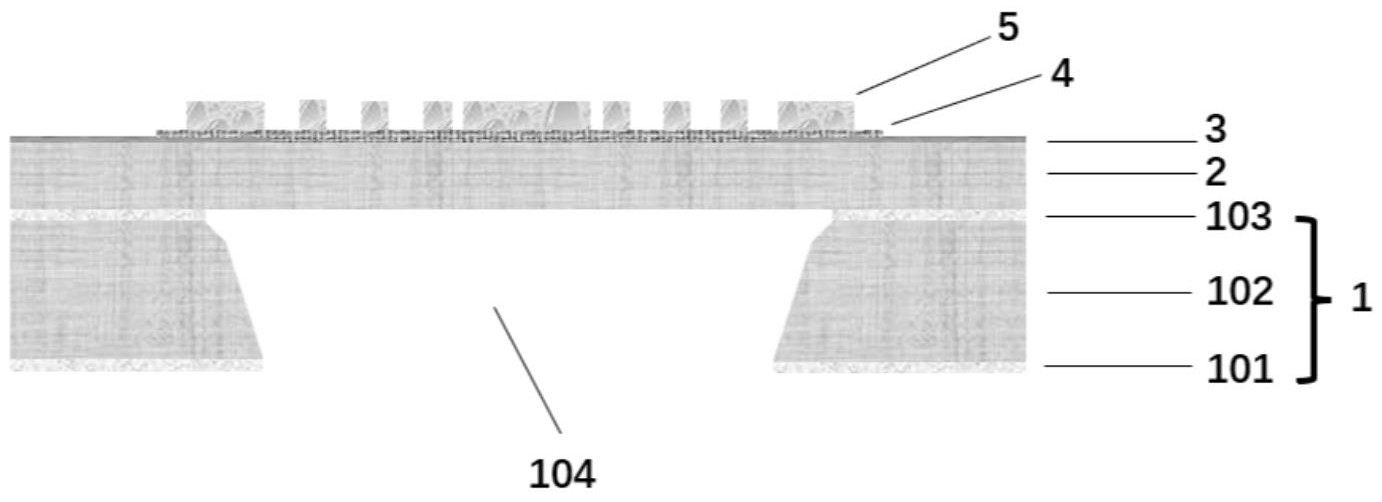
The embodiments of the present application provide a piezoelectric microelectromechanical systems (MEMS) microphone, a method for manufacturing the same, and applications thereof, belonging to the field of MEMS technology. The microphone according to the embodiments includes a substrate, a diaphragm, an oxide layer, a piezoelectric layer, and an electrode layer sequentially stacked one above another. The electrode layer includes a voice-sensing electrode, an infrasound-sensing electrode, and a drive electrode. The microphone can perform voice detection based on the direct piezoelectric effect using the diaphragm, the piezoelectric layer, and the voice-sensing electrode. Simultaneously with voice detection, the inverse piezoelectric effect is utilized by applying a continuously controlled alternating voltage to the drive electrode, thereby driving the diaphragm to oscillate at its resonant frequency and maintain its vibration mode. A disturbance signal produced by the infrasound signal on the resonant frequency of the diaphragm is then read out, converting the low-frequency physical quantity of infrasound into a measurable disturbance signal. This addresses low-frequency attenuation caused by slit-design and packaging constraints.
Publication No.:
CN122741852A
Publication Date:
2026-09-11
Applicant(s):
澳門大學; University of Macau
Inventor(s):
劉俊辰;鄭卓悅;王苑;麥沛然; Liu, Junchen; Zheng, Zhuoyue; Wang, Yuan; Mai, Peiran
Technology Field(s):
視聽技術 Audio-visual technology
The embodiments of the present application provide a piezoelectric microelectromechanical systems (MEMS) microphone, a method for manufacturing the same, and applications thereof, belonging to the field of MEMS technology. The microphone according to the embodiments includes a substrate, a diaphragm, an oxide layer, a piezoelectric layer, and an electrode layer sequentially stacked one above another. The electrode layer includes a voice-sensing electrode, an infrasound-sensing electrode, and a drive electrode. The microphone can perform voice detection based on the direct piezoelectric effect using the diaphragm, the piezoelectric layer, and the voice-sensing electrode. Simultaneously with voice detection, the inverse piezoelectric effect is utilized by applying a continuously controlled alternating voltage to the drive electrode, thereby driving the diaphragm to oscillate at its resonant frequency and maintain its vibration mode. A disturbance signal produced by the infrasound signal on the resonant frequency of the diaphragm is then read out, converting the low-frequency physical quantity of infrasound into a measurable disturbance signal. This addresses low-frequency attenuation caused by slit-design and packaging constraints.
A power distribution system planning method for dealing with seasonal imbalance of heat waves and strengthening year by year [Granted Patent]
一種應對熱浪季節性失衡與逐年強化的配電系統規劃方法 [授權專利]
Publication No.:
CN122414759B
Publication Date:
2026-09-08
Applicant(s):
珠海澳大科技研究院;國網江蘇省電力有限公司電力科學研究院;橫琴粵澳深度合作區澳門大學高等研究院(橫琴澳門大學高等研究院); Zhuhai UM Science & Technology Research Institute (ZUMRI); State Grid Jiangsu Electric Power Co., Ltd. Electric Power Research Institute; University of Macau Advanced Research Institute in Hengqin (HUMRI)
Inventor(s):
惠紅勳;張振威;陳燁;宋永華; Hui, Hongxun; Zhang, Zhenwei; Chen, Ye; Song, Yonghua
Technology Field(s):
資訊科技管理方法;電腦技術;電機、設備、能源 IT methods for management; Computer technology; Electrical machinery, apparatus, energy
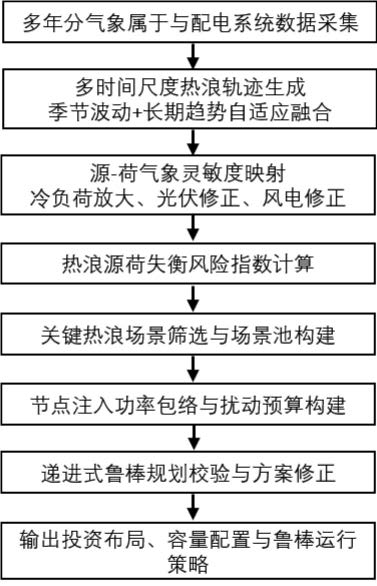
The present invention discloses a distribution system planning method for addressing the seasonal imbalance and year-by-year intensification of heat waves, belonging to the field of power system planning and operational optimization. The method first collects multi-year hourly meteorological data and basic distribution system data for a target city, and generates multi-timescale heat-wave meteorological trajectories incorporating both short-term seasonal fluctuations and long-term intensification trends. Meteorological variables are then converted, through source-load meteorological sensitivity mapping, into building cooling-load amplification factors and renewable-energy output correction factors, thereby obtaining nodal net power injections. A heat-wave source-load imbalance risk index is calculated to screen key heat-wave scenarios. Based thereon, nodal net power injection envelopes and a heat-wave disturbance budget are constructed to form a compact composite uncertainty set. A progressive two-stage robust planning model is then established and solved. The present invention reduces the computational complexity associated with high-dimensional heat-wave scenarios and improves the planning adaptability, operational safety, and engineering feasibility of urban distribution systems under heat-wave conditions.
Publication No.:
CN122414759B
Publication Date:
2026-09-08
Applicant(s):
珠海澳大科技研究院;國網江蘇省電力有限公司電力科學研究院;橫琴粵澳深度合作區澳門大學高等研究院(橫琴澳門大學高等研究院); Zhuhai UM Science & Technology Research Institute (ZUMRI); State Grid Jiangsu Electric Power Co., Ltd. Electric Power Research Institute; University of Macau Advanced Research Institute in Hengqin (HUMRI)
Inventor(s):
惠紅勳;張振威;陳燁;宋永華; Hui, Hongxun; Zhang, Zhenwei; Chen, Ye; Song, Yonghua
Technology Field(s):
資訊科技管理方法;電腦技術;電機、設備、能源 IT methods for management; Computer technology; Electrical machinery, apparatus, energy
The present invention discloses a distribution system planning method for addressing the seasonal imbalance and year-by-year intensification of heat waves, belonging to the field of power system planning and operational optimization. The method first collects multi-year hourly meteorological data and basic distribution system data for a target city, and generates multi-timescale heat-wave meteorological trajectories incorporating both short-term seasonal fluctuations and long-term intensification trends. Meteorological variables are then converted, through source-load meteorological sensitivity mapping, into building cooling-load amplification factors and renewable-energy output correction factors, thereby obtaining nodal net power injections. A heat-wave source-load imbalance risk index is calculated to screen key heat-wave scenarios. Based thereon, nodal net power injection envelopes and a heat-wave disturbance budget are constructed to form a compact composite uncertainty set. A progressive two-stage robust planning model is then established and solved. The present invention reduces the computational complexity associated with high-dimensional heat-wave scenarios and improves the planning adaptability, operational safety, and engineering feasibility of urban distribution systems under heat-wave conditions.
A supermolecular modified polymer, supermolecular polymer microspheres and their preparation methods
一種超分子改性聚合物、超分子聚合物微球及其製備方法
Publication No.:
CN122705914A
Publication Date:
2026-09-08
Applicant(s):
清華大學;澳門大學; Tsinghua University; University of Macau
Inventor(s):
喻國燦;汪洋帆;王瑞兵;楊凱; Yu, Guocan; Wang, Yangfan; Wang, Ruibing; Yang, Kai
Technology Field(s):
高分子化學,聚合物;其他專用機械;製藥 Macromolecular chemistry, polymers; Other special machines; Pharmaceuticals
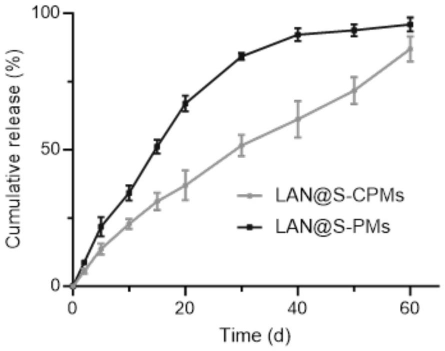
The present invention discloses a supramolecularly modified polymer, supramolecular polymer microspheres, and preparation methods thereof. The supramolecular polymer microspheres comprise a guest-molecule drug, a supramolecularly modified polymer, and PLGA, wherein the supramolecularly modified polymer preferably has a weight-average molecular weight (Mw) of 40,000. The invention further discloses the use of the supramolecular polymer microspheres in the treatment of acromegaly. The microspheres of the present invention enable sustained, slow drug release for more than two months, substantially reducing the frequency of injections and improving patient compliance. In addition, the raw materials and preparation process designed according to the present invention are relatively low in cost and readily scalable.
Publication No.:
CN122705914A
Publication Date:
2026-09-08
Applicant(s):
清華大學;澳門大學; Tsinghua University; University of Macau
Inventor(s):
喻國燦;汪洋帆;王瑞兵;楊凱; Yu, Guocan; Wang, Yangfan; Wang, Ruibing; Yang, Kai
Technology Field(s):
高分子化學,聚合物;其他專用機械;製藥 Macromolecular chemistry, polymers; Other special machines; Pharmaceuticals
The present invention discloses a supramolecularly modified polymer, supramolecular polymer microspheres, and preparation methods thereof. The supramolecular polymer microspheres comprise a guest-molecule drug, a supramolecularly modified polymer, and PLGA, wherein the supramolecularly modified polymer preferably has a weight-average molecular weight (Mw) of 40,000. The invention further discloses the use of the supramolecular polymer microspheres in the treatment of acromegaly. The microspheres of the present invention enable sustained, slow drug release for more than two months, substantially reducing the frequency of injections and improving patient compliance. In addition, the raw materials and preparation process designed according to the present invention are relatively low in cost and readily scalable.