


Innovation Watch - Latest UM Patents (2026-07-06)
A rail damage detection method and system based on multi-domain information collaborative transfer learning
一種基於多域信息協同遷移學習的鋼軌損傷檢測方法及系統
Publication No.:
CN122306960A
Publication Date:
2026-07-06
Applicant(s):
澳門大學; University of Macau
Inventor(s):
詹江正;顏王吉;阮家榮;林朗焜;孫川; Zhan Jiangzheng; Yan Wangji; Ruan Jiarong; Lin Langkun; Sun Chuan
Technology Field(s):
測量,電腦技術 Measurement, Computer technology
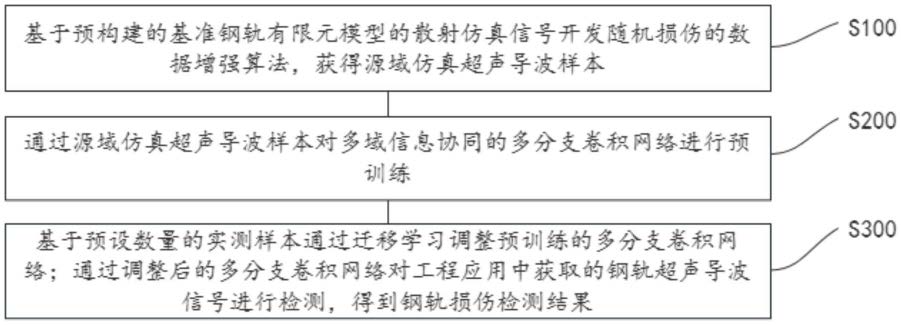
The present invention discloses a rail damage detection method and system based on multi-domain information collaborative transfer learning. The method comprises: developing a random-damage data augmentation algorithm based on scattering simulation signals from a pre-constructed baseline rail finite element model to obtain source-domain simulated ultrasonic guided-wave samples; pre-training a multi-branch convolutional network with multi-domain information collaboration using the source-domain simulated ultrasonic guided-wave samples; adjusting the pre-trained multi-branch convolutional network through transfer learning based on a preset number of measured samples; and detecting rail ultrasonic guided-wave signals acquired in engineering applications using the adjusted multi-branch convolutional network to obtain rail damage detection results. The present invention can enhance the diversity of source-domain simulation data to complete high-accuracy model pre-training, and can improve the generalization capability of the model for measured signals by transferring the model to measured data, thereby improving the ability of the convolutional network to classify rail damage locations. The invention can be widely applied in the field of nondestructive testing technology.
Publication No.:
CN122306960A
Publication Date:
2026-07-06
Applicant(s):
澳門大學; University of Macau
Inventor(s):
詹江正;顏王吉;阮家榮;林朗焜;孫川; Zhan Jiangzheng; Yan Wangji; Ruan Jiarong; Lin Langkun; Sun Chuan
Technology Field(s):
測量,電腦技術 Measurement, Computer technology
The present invention discloses a rail damage detection method and system based on multi-domain information collaborative transfer learning. The method comprises: developing a random-damage data augmentation algorithm based on scattering simulation signals from a pre-constructed baseline rail finite element model to obtain source-domain simulated ultrasonic guided-wave samples; pre-training a multi-branch convolutional network with multi-domain information collaboration using the source-domain simulated ultrasonic guided-wave samples; adjusting the pre-trained multi-branch convolutional network through transfer learning based on a preset number of measured samples; and detecting rail ultrasonic guided-wave signals acquired in engineering applications using the adjusted multi-branch convolutional network to obtain rail damage detection results. The present invention can enhance the diversity of source-domain simulation data to complete high-accuracy model pre-training, and can improve the generalization capability of the model for measured signals by transferring the model to measured data, thereby improving the ability of the convolutional network to classify rail damage locations. The invention can be widely applied in the field of nondestructive testing technology.
A vehicle-mounted ranging system, location information determination method and related equipment
一種車載測距系統、位置信息確定方法及相關設備
Publication No.:
CN122307571A
Publication Date:
2026-07-06
Applicant(s):
澳門大學; University of Macau
Inventor(s):
桑浩楊;羅文基;王朝; Sang Hao Yang; Luo Wenji; Wang Chao
Technology Field(s):
測量,電腦技術 Measurement, Computer technology
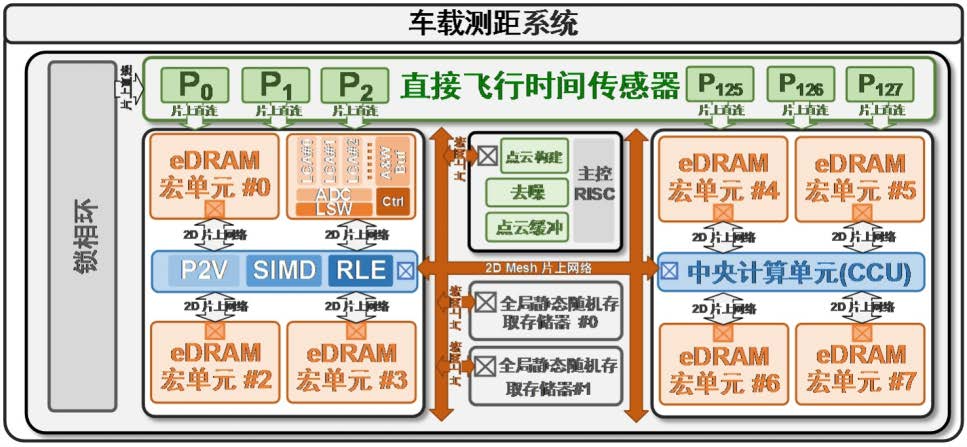
Embodiments of the present application provide an in-vehicle ranging system, a position information determination method, and related devices, and belong to the field of automotive technologies. The system integrates an on-chip direct time-of-flight sensor, embedded dynamic random-access macro memory, and a central computing unit. While ensuring low power consumption and low latency, the system effectively improves computational efficiency under hybrid CNN and Transformer workloads, reduces energy consumption associated with off-chip memory access, and enhances the real-time performance and reliability of overall three-dimensional environmental perception.
Publication No.:
CN122307571A
Publication Date:
2026-07-06
Applicant(s):
澳門大學; University of Macau
Inventor(s):
桑浩楊;羅文基;王朝; Sang Hao Yang; Luo Wenji; Wang Chao
Technology Field(s):
測量,電腦技術 Measurement, Computer technology
Embodiments of the present application provide an in-vehicle ranging system, a position information determination method, and related devices, and belong to the field of automotive technologies. The system integrates an on-chip direct time-of-flight sensor, embedded dynamic random-access macro memory, and a central computing unit. While ensuring low power consumption and low latency, the system effectively improves computational efficiency under hybrid CNN and Transformer workloads, reduces energy consumption associated with off-chip memory access, and enhances the real-time performance and reliability of overall three-dimensional environmental perception.
A microfluidic biosensor identification method and system for non-diagnostic purposes [Granted Patent]
一種非診斷目的的微流控生物傳感識別方法及系統 [授權專利]
Publication No.:
CN121595849B
Publication Date:
2026-07-06
Applicant(s):
橫琴粵澳深度合作區澳門大學高等研究院(橫琴澳門大學高等研究院);珠海普羅精準醫療科技有限公司; University of Macau Advanced Research Institute in Hengqin (HUMRI); Zhuhai ProMed Technology Co., Ltd.
Inventor(s):
惠文豪;魏明吉;賈艷偉;朱真;于淞;李家明; Hui Wenhao; Wei Mingji; Jia Yanwei; Zhu Zhen; Yu Song; Li Jiaming
Technology Field(s):
生物材料分析,測量,電腦技術 Analysis of biological materials, Measurement, Computer technology
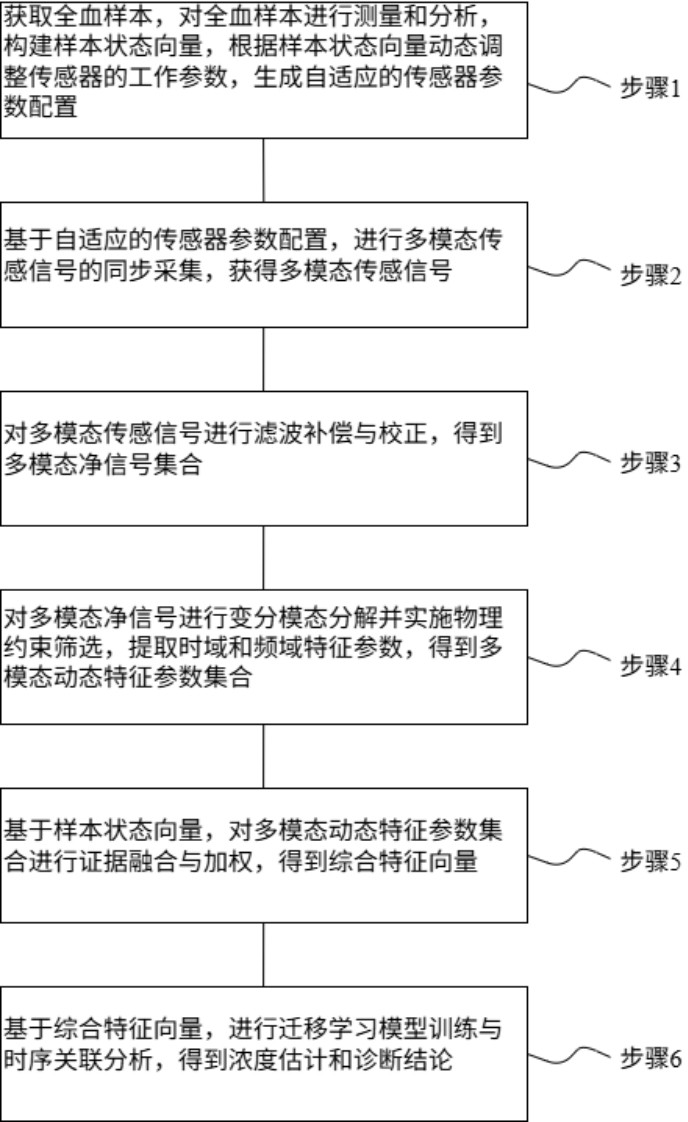
The present invention relates to the technical field of biomedical detection, and discloses a microfluidic biosensing identification method and system for non-diagnostic purposes. The microfluidic biosensing identification method for non-diagnostic purposes comprises: obtaining a whole blood sample; measuring and analyzing the whole blood sample to construct a sample state vector and dynamically adjust operating parameters of a sensor; synchronously acquiring multimodal sensing signals to obtain multimodal sensing signals and environmental parameter signals; performing filtering compensation and correction on the environmental parameter signals; performing variational mode decomposition on multimodal net signals and implementing physical-constraint screening to extract time-domain and frequency-domain characteristic parameters; performing evidence fusion and weighting on a set of multimodal dynamic characteristic parameters; and performing transfer-learning model training and temporal correlation analysis to obtain a concentration estimate and a diagnostic conclusion. The present invention enables direct detection of whole blood samples, collaborative analysis of multimodal signals, real-time monitoring of dynamic processes, environment-adaptive compensation, and accurate identification under small-sample conditions.
Publication No.:
CN121595849B
Publication Date:
2026-07-06
Applicant(s):
橫琴粵澳深度合作區澳門大學高等研究院(橫琴澳門大學高等研究院);珠海普羅精準醫療科技有限公司; University of Macau Advanced Research Institute in Hengqin (HUMRI); Zhuhai ProMed Technology Co., Ltd.
Inventor(s):
惠文豪;魏明吉;賈艷偉;朱真;于淞;李家明; Hui Wenhao; Wei Mingji; Jia Yanwei; Zhu Zhen; Yu Song; Li Jiaming
Technology Field(s):
生物材料分析,測量,電腦技術 Analysis of biological materials, Measurement, Computer technology
The present invention relates to the technical field of biomedical detection, and discloses a microfluidic biosensing identification method and system for non-diagnostic purposes. The microfluidic biosensing identification method for non-diagnostic purposes comprises: obtaining a whole blood sample; measuring and analyzing the whole blood sample to construct a sample state vector and dynamically adjust operating parameters of a sensor; synchronously acquiring multimodal sensing signals to obtain multimodal sensing signals and environmental parameter signals; performing filtering compensation and correction on the environmental parameter signals; performing variational mode decomposition on multimodal net signals and implementing physical-constraint screening to extract time-domain and frequency-domain characteristic parameters; performing evidence fusion and weighting on a set of multimodal dynamic characteristic parameters; and performing transfer-learning model training and temporal correlation analysis to obtain a concentration estimate and a diagnostic conclusion. The present invention enables direct detection of whole blood samples, collaborative analysis of multimodal signals, real-time monitoring of dynamic processes, environment-adaptive compensation, and accurate identification under small-sample conditions.
Application of bicyclic phloroglucinol compounds in preparation of antibacterial drugs
雙環類間苯三酚化合物在製備抗菌藥物中的應用
Publication No.:
CN122320928A
Publication Date:
2026-07-06
Applicant(s):
澳門大學;南方科技大學; University of Macau; Southern University of Science and Technology
Inventor(s):
陳修平;王鈺銘;李闯創;漢京春; Chen Xiuping; Wang Yuming; Li Chuangchuang; Han Jingchun
Technology Field(s):
製藥 Pharmaceuticals
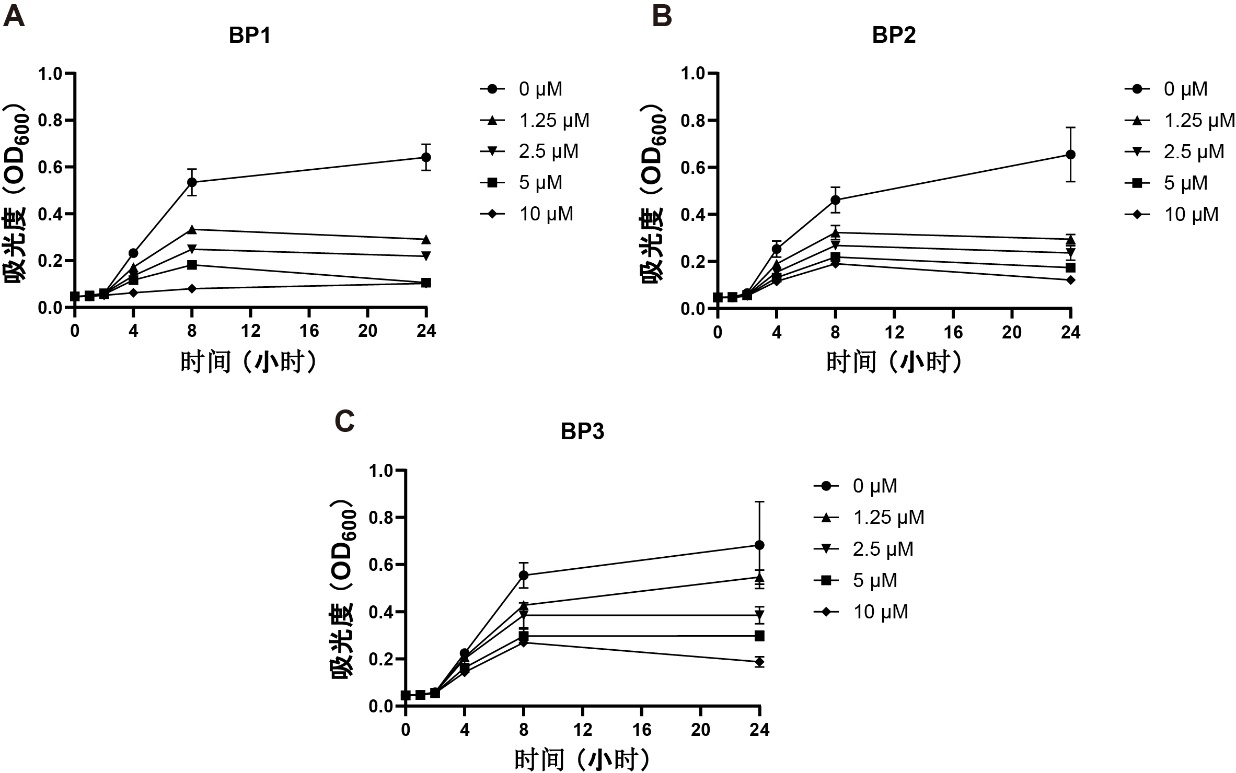
The present invention discloses the use of bicyclic phloroglucinol compounds in the preparation of antibacterial drugs, and relates to the technical field of medicine. The bicyclic phloroglucinol compounds (Bicyclic Phloroglucinols, BPs) synthesized based on the scaffold of natural phloroglucinol exhibit broad inhibitory activity against Gram-positive bacteria. In addition, the BPs can effectively reduce the effective concentrations of common antibiotics, including vancomycin, norfloxacin, meropenem, erythromycin, and rifampicin, against S. aureus strains, thereby enhancing the antibacterial effects of the antibiotics and expanding their antibacterial spectrum. The BPs involved in the present invention have advantages including novel structures, highly effective antibacterial activity, and synergistic enhancement when used in combination with antibiotics, and therefore have great potential for development into antibacterial drugs and high commercial value.
Publication No.:
CN122320928A
Publication Date:
2026-07-06
Applicant(s):
澳門大學;南方科技大學; University of Macau; Southern University of Science and Technology
Inventor(s):
陳修平;王鈺銘;李闯創;漢京春; Chen Xiuping; Wang Yuming; Li Chuangchuang; Han Jingchun
Technology Field(s):
製藥 Pharmaceuticals
The present invention discloses the use of bicyclic phloroglucinol compounds in the preparation of antibacterial drugs, and relates to the technical field of medicine. The bicyclic phloroglucinol compounds (Bicyclic Phloroglucinols, BPs) synthesized based on the scaffold of natural phloroglucinol exhibit broad inhibitory activity against Gram-positive bacteria. In addition, the BPs can effectively reduce the effective concentrations of common antibiotics, including vancomycin, norfloxacin, meropenem, erythromycin, and rifampicin, against S. aureus strains, thereby enhancing the antibacterial effects of the antibiotics and expanding their antibacterial spectrum. The BPs involved in the present invention have advantages including novel structures, highly effective antibacterial activity, and synergistic enhancement when used in combination with antibiotics, and therefore have great potential for development into antibacterial drugs and high commercial value.
A phase-controlled cobalt-based catalyst for producing ammonia by electrocatalytic reduction of nitrate radicals and its preparation method and application
一種用於硝酸根電催化還原製氨的相調控鈷基催化劑及其製備方法和應用
Publication No.:
CN122327273A
Publication Date:
2026-07-06
Applicant(s):
澳門大學; University of Macau
Inventor(s):
潘暉;康家騫; Pan Hui; Kang Jia Qian
Technology Field(s):
表面技術、塗層 Surface technology, coating
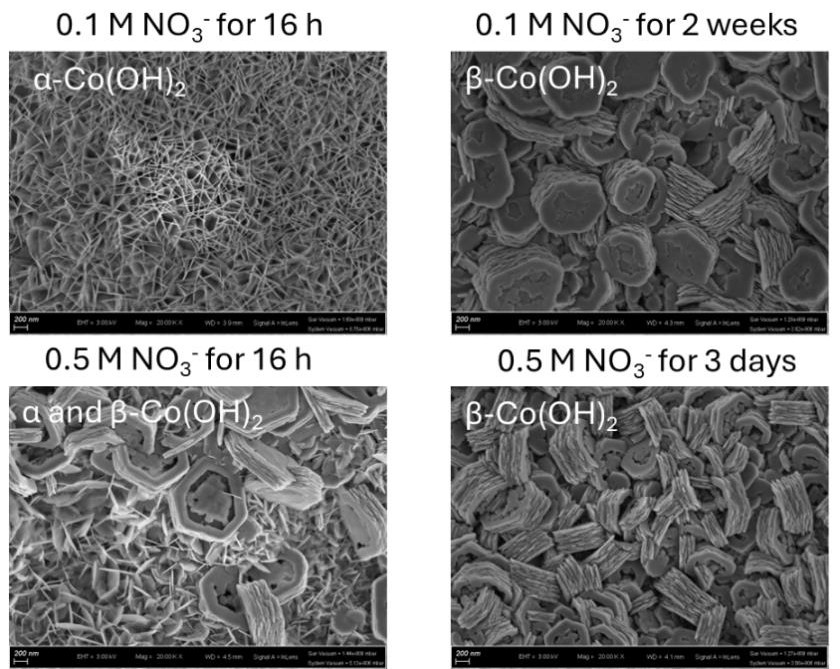
The present invention discloses a phase-regulated cobalt-based catalyst for the electrocatalytic reduction of nitrate to ammonia, as well as a preparation method and application thereof, and relates to the technical field of electrocatalytic reduction. The catalyst proposed in the present invention uses cobalt foam as a substrate, with β-phase cobalt hydroxide loaded in situ on the surface thereof. Through the reconstruction of a cobalt hydroxide precatalyst at the initial stage of nitrate reduction, α-phase cobalt hydroxide is reconstructed into β-phase cobalt hydroxide, thereby significantly improving the Faradaic efficiency of the catalyst. Moreover, during the nitrate reduction process, metallic cobalt continuously reacts with nitrate at a relatively low rate to generate cobalt hydroxide, which is then reconstructed in situ into β-phase cobalt hydroxide. In this manner, dynamic regeneration of the active species is achieved, ensuring the long-term stability and Faradaic efficiency of the catalyst. Accordingly, by using only single-metal cobalt as the precursor, long-term stability and high Faradaic efficiency for the electrocatalytic reduction of nitrate can be achieved at high current density.
Publication No.:
CN122327273A
Publication Date:
2026-07-06
Applicant(s):
澳門大學; University of Macau
Inventor(s):
潘暉;康家騫; Pan Hui; Kang Jia Qian
Technology Field(s):
表面技術、塗層 Surface technology, coating
The present invention discloses a phase-regulated cobalt-based catalyst for the electrocatalytic reduction of nitrate to ammonia, as well as a preparation method and application thereof, and relates to the technical field of electrocatalytic reduction. The catalyst proposed in the present invention uses cobalt foam as a substrate, with β-phase cobalt hydroxide loaded in situ on the surface thereof. Through the reconstruction of a cobalt hydroxide precatalyst at the initial stage of nitrate reduction, α-phase cobalt hydroxide is reconstructed into β-phase cobalt hydroxide, thereby significantly improving the Faradaic efficiency of the catalyst. Moreover, during the nitrate reduction process, metallic cobalt continuously reacts with nitrate at a relatively low rate to generate cobalt hydroxide, which is then reconstructed in situ into β-phase cobalt hydroxide. In this manner, dynamic regeneration of the active species is achieved, ensuring the long-term stability and Faradaic efficiency of the catalyst. Accordingly, by using only single-metal cobalt as the precursor, long-term stability and high Faradaic efficiency for the electrocatalytic reduction of nitrate can be achieved at high current density.