


Innovation Watch - Latest UM Patents (2026-06-29)
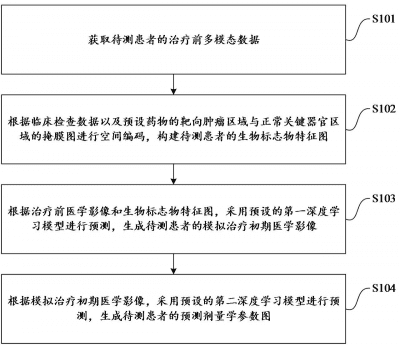
Absorbed dose prediction methods, devices, equipment and media based on deep learning
基於深度學習的吸收劑量預測方法、裝置、設備及介質
Publication No.:
CN122266645A
Publication Date:
2026-06-23
Applicant(s):
澳門大學; University of Macau
Inventor(s):
莫昇萍;劉怡斌; Mo Shengping; Liu Yibin
Technology Field(s):
醫療技術, 電腦技術 Medical technology, Computer technology
The present application provides a deep learning-based method, apparatus, device, and medium for predicting absorbed dose, and relates to the technical field of medical image processing. The method includes: obtaining pre-treatment multimodal data of a patient to be tested; performing spatial encoding based on clinical examination data and mask images of a target tumor region and normal critical organ regions for a preset drug, so as to construct a biomarker feature map of the patient to be tested; predicting, based on the pre-treatment medical images and the biomarker feature map, by using a preset first deep learning model to generate simulated medical images of the patient to be tested at an initial stage of treatment; and predicting, based on the simulated medical images at the initial stage of treatment, by using a preset second deep learning model to generate a predicted post-treatment dosimetric parameter map of the patient to be tested. The present application can improve the accuracy of prediction and evaluation of radionuclide absorbed dose.
Publication No.:
CN122266645A
Publication Date:
2026-06-23
Applicant(s):
澳門大學; University of Macau
Inventor(s):
莫昇萍;劉怡斌; Mo Shengping; Liu Yibin
Technology Field(s):
醫療技術, 電腦技術 Medical technology, Computer technology
The present application provides a deep learning-based method, apparatus, device, and medium for predicting absorbed dose, and relates to the technical field of medical image processing. The method includes: obtaining pre-treatment multimodal data of a patient to be tested; performing spatial encoding based on clinical examination data and mask images of a target tumor region and normal critical organ regions for a preset drug, so as to construct a biomarker feature map of the patient to be tested; predicting, based on the pre-treatment medical images and the biomarker feature map, by using a preset first deep learning model to generate simulated medical images of the patient to be tested at an initial stage of treatment; and predicting, based on the simulated medical images at the initial stage of treatment, by using a preset second deep learning model to generate a predicted post-treatment dosimetric parameter map of the patient to be tested. The present application can improve the accuracy of prediction and evaluation of radionuclide absorbed dose.
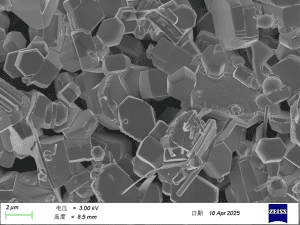
A P2 type high-entropy layered oxide and its preparation method, cathode material and sodium-ion battery
一種P2型高熵層狀氧化物及其製備方法、正極材料和鈉離子電池
Publication No.:
CN122267163A
Publication Date:
2026-06-23
Applicant(s):
澳門大學; University of Macau
Inventor(s):
邵懷宇;王柯涵; Shao Huaiyu; Wang Kehan
Technology Field(s):
材料、冶金, 電機、設備、能源 Materials, metallurgy; Electrical machinery, apparatus, energy
The present invention discloses a P2-type high-entropy layered oxide, a preparation method thereof, a cathode material, and a sodium-ion battery, and relates to the technical field of sodium-ion battery materials. A low-nickel cobalt-free or low-nickel low-cobalt formulation is adopted, thereby effectively reducing the preparation cost of the material in terms of composition. Reasonable control of the contents of the respective metal elements, in combination with an optimized preparation method, effectively prevents precipitation of a secondary phase in the P2-type high-entropy layered oxide, thereby successfully and efficiently preparing a high-entropy layered oxide that is free of impurities and has a single-phase P2-type crystal structure. This is beneficial to improving the preparation efficiency and stability of the P2-type high-entropy layered oxide and achieving a stable improvement in the electrochemical performance of the sodium-ion battery. This strategy can be extended to other high-entropy layered oxide systems.
Publication No.:
CN122267163A
Publication Date:
2026-06-23
Applicant(s):
澳門大學; University of Macau
Inventor(s):
邵懷宇;王柯涵; Shao Huaiyu; Wang Kehan
Technology Field(s):
材料、冶金, 電機、設備、能源 Materials, metallurgy; Electrical machinery, apparatus, energy
The present invention discloses a P2-type high-entropy layered oxide, a preparation method thereof, a cathode material, and a sodium-ion battery, and relates to the technical field of sodium-ion battery materials. A low-nickel cobalt-free or low-nickel low-cobalt formulation is adopted, thereby effectively reducing the preparation cost of the material in terms of composition. Reasonable control of the contents of the respective metal elements, in combination with an optimized preparation method, effectively prevents precipitation of a secondary phase in the P2-type high-entropy layered oxide, thereby successfully and efficiently preparing a high-entropy layered oxide that is free of impurities and has a single-phase P2-type crystal structure. This is beneficial to improving the preparation efficiency and stability of the P2-type high-entropy layered oxide and achieving a stable improvement in the electrochemical performance of the sodium-ion battery. This strategy can be extended to other high-entropy layered oxide systems.
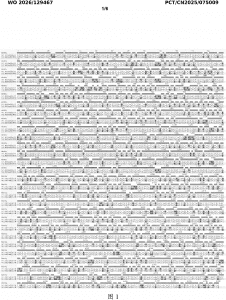
mRNA Vaccine for Preventing or Treating Malignant Tumors, Preparation Method Therefor and Use Thereof
一種預防或治療惡性腫瘤的mRNA疫苗及其製備方法與應用
Publication No.:
WO2026129467A1
Publication Date:
2026-06-25
Applicant(s):
中山大學附屬第七醫院(深圳);澳門大學; The Seventh Affiliated Hospital, Sun Yat-Sen University; University of Macau
Inventor(s):
肖芷潔;查高峰;毛曉雯;夏恒; Xiao Zhijie; Zha Gaofeng; Mao Xiaowen; Xia Heng
Technology Field(s):
生物技術, 製藥 Biotechnology, Pharmaceuticals
This invention belongs to the field of biomedical technology and provides an mRNA vaccine for preventing or treating malignant tumors, as well as a method for preparing the same and the use thereof. The mRNA vaccine comprises a nucleic acid molecule encoding an NID1 antigen and cationic lipid nanoparticles encapsulating the nucleic acid molecule. The nucleic acid molecule or the lipid nanoparticles thereof exhibit good immunogenicity and are capable of inducing strong cellular and humoral immune responses in a subject within a short period of time. After the nucleic acid molecule or the lipid nanoparticles thereof are delivered into the body, the NID1 protein can be expressed in vivo, thereby triggering an immune response in the subject and inducing an anti-tumor immune response. In addition, the nucleic acid molecule or the lipid nanoparticles thereof can effectively inhibit tumor growth at a low dose, and can be prepared rapidly and conveniently, enabling large-scale production within a short period of time. This is beneficial for industrialization of the drug and for reducing the cost of anti-tumor drugs.
Publication No.:
WO2026129467A1
Publication Date:
2026-06-25
Applicant(s):
中山大學附屬第七醫院(深圳);澳門大學; The Seventh Affiliated Hospital, Sun Yat-Sen University; University of Macau
Inventor(s):
肖芷潔;查高峰;毛曉雯;夏恒; Xiao Zhijie; Zha Gaofeng; Mao Xiaowen; Xia Heng
Technology Field(s):
生物技術, 製藥 Biotechnology, Pharmaceuticals
This invention belongs to the field of biomedical technology and provides an mRNA vaccine for preventing or treating malignant tumors, as well as a method for preparing the same and the use thereof. The mRNA vaccine comprises a nucleic acid molecule encoding an NID1 antigen and cationic lipid nanoparticles encapsulating the nucleic acid molecule. The nucleic acid molecule or the lipid nanoparticles thereof exhibit good immunogenicity and are capable of inducing strong cellular and humoral immune responses in a subject within a short period of time. After the nucleic acid molecule or the lipid nanoparticles thereof are delivered into the body, the NID1 protein can be expressed in vivo, thereby triggering an immune response in the subject and inducing an anti-tumor immune response. In addition, the nucleic acid molecule or the lipid nanoparticles thereof can effectively inhibit tumor growth at a low dose, and can be prepared rapidly and conveniently, enabling large-scale production within a short period of time. This is beneficial for industrialization of the drug and for reducing the cost of anti-tumor drugs.
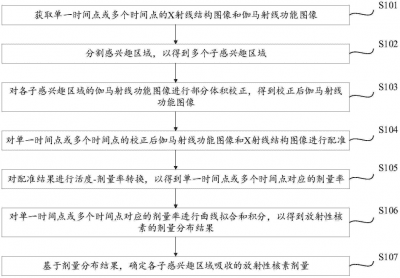
Voxel-level nuclide dose estimation method based on nuclide imaging and computer equipment [Granted Patent]
基於核素顯像的體素級核素劑量估算方法以及計算機設備 [授權專利]
Publication No.:
CN120661851B
Publication Date:
2026-06-26
Applicant(s):
澳門大學; University of Macau
Inventor(s):
莫昇萍;劉怡斌;方志傑; Mo Shengping; Liu Yibin; Fang Zhijie
Technology Field(s):
電腦技術 Computer technology
The present application provides a voxel-level radionuclide dose estimation method based on radionuclide imaging, and a computer device. The method comprises: acquiring X-ray structural images and gamma-ray functional images at a single time point or at multiple time points; segmenting a region of interest to obtain a plurality of sub-regions of interest; performing region-level partial volume correction on the plurality of sub-regions of interest in the gamma-ray functional images to obtain corrected gamma-ray functional images; registering the corrected gamma-ray functional images; converting activity in the registration result into a dose rate to obtain a dose rate; and performing voxel-level curve fitting and integration on the dose rate to obtain an absorbed dose distribution result, and determining an absorbed dose for each sub-region of interest based on the absorbed dose result. The present application can reduce the impact of the partial volume effect on the resolution of radionuclide imaging, thereby improving the registration accuracy of radionuclide images and further improving the accuracy of radionuclide absorbed dose estimation.
Publication No.:
CN120661851B
Publication Date:
2026-06-26
Applicant(s):
澳門大學; University of Macau
Inventor(s):
莫昇萍;劉怡斌;方志傑; Mo Shengping; Liu Yibin; Fang Zhijie
Technology Field(s):
電腦技術 Computer technology
The present application provides a voxel-level radionuclide dose estimation method based on radionuclide imaging, and a computer device. The method comprises: acquiring X-ray structural images and gamma-ray functional images at a single time point or at multiple time points; segmenting a region of interest to obtain a plurality of sub-regions of interest; performing region-level partial volume correction on the plurality of sub-regions of interest in the gamma-ray functional images to obtain corrected gamma-ray functional images; registering the corrected gamma-ray functional images; converting activity in the registration result into a dose rate to obtain a dose rate; and performing voxel-level curve fitting and integration on the dose rate to obtain an absorbed dose distribution result, and determining an absorbed dose for each sub-region of interest based on the absorbed dose result. The present application can reduce the impact of the partial volume effect on the resolution of radionuclide imaging, thereby improving the registration accuracy of radionuclide images and further improving the accuracy of radionuclide absorbed dose estimation.
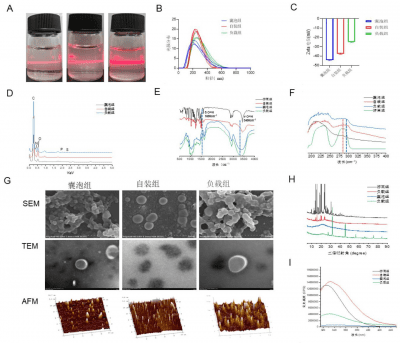
Schisandra chinensis exosome-like vesicles-mediated pentazanol targeted delivery preparation and its application in preventing and treating alcohol-induced liver injury
五味子外泌體樣囊泡介導的安五脂素靶向遞送製劑及其防治酒精誘導肝損傷的應用
Publication No.:
CN122272520A
Publication Date:
2026-06-26
Applicant(s):
澳門大學; University of Macau
Inventor(s):
鐘章鋒;廖豐蘊;張麗莉;申晨曉;崔殿鑫; Zhong Zhangfeng; Liao Fengyun; Zhang Lili; Shen Chenxiao; Cui Dianxin
Technology Field(s):
生物技術, 製藥 Biotechnology, Pharmaceuticals
The present invention belongs to the field of biomedical technology and discloses a formulation for targeted delivery of anwulignan mediated by Schisandra chinensis exosome-like vesicles, and the use thereof in preventing and treating alcohol-induced liver injury. The present invention provides a drug delivery system that improves the water solubility and dispersibility of a drug, such as anwulignan, by means of a carrier-free self-assembled nanoparticle dosage form of the drug, while encapsulating the drug with vesicles derived from a plant, such as Schisandra chinensis. By utilizing the excellent biocompatibility, targeting capability, and permeability of the exosome-like vesicles, the drug delivery system enhances drug accumulation and bioavailability in liver tissue. The drug delivery system is expected not only to address key challenges in the clinical application of drugs, such as poor water solubility and low bioavailability, but also to provide a new technical approach for the efficient delivery of natural active ingredients, and is of significant theoretical and practical importance for promoting the development of hangover-relief health products and therapeutic drugs for liver injury.
Publication No.:
CN122272520A
Publication Date:
2026-06-26
Applicant(s):
澳門大學; University of Macau
Inventor(s):
鐘章鋒;廖豐蘊;張麗莉;申晨曉;崔殿鑫; Zhong Zhangfeng; Liao Fengyun; Zhang Lili; Shen Chenxiao; Cui Dianxin
Technology Field(s):
生物技術, 製藥 Biotechnology, Pharmaceuticals
The present invention belongs to the field of biomedical technology and discloses a formulation for targeted delivery of anwulignan mediated by Schisandra chinensis exosome-like vesicles, and the use thereof in preventing and treating alcohol-induced liver injury. The present invention provides a drug delivery system that improves the water solubility and dispersibility of a drug, such as anwulignan, by means of a carrier-free self-assembled nanoparticle dosage form of the drug, while encapsulating the drug with vesicles derived from a plant, such as Schisandra chinensis. By utilizing the excellent biocompatibility, targeting capability, and permeability of the exosome-like vesicles, the drug delivery system enhances drug accumulation and bioavailability in liver tissue. The drug delivery system is expected not only to address key challenges in the clinical application of drugs, such as poor water solubility and low bioavailability, but also to provide a new technical approach for the efficient delivery of natural active ingredients, and is of significant theoretical and practical importance for promoting the development of hangover-relief health products and therapeutic drugs for liver injury.
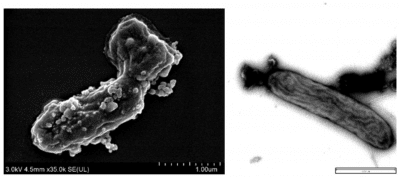
A magnetically guided probiotic-nanovesicle complex and its preparation method and application
一種磁性導向的益生菌-納米囊泡複合體及其製備方法和應用
Publication No.:
CN122272838A
Publication Date:
2026-06-26
Applicant(s):
澳門大學; University of Macau
Inventor(s):
王瑞兵;彭宣淇;侯偉亮; Wang Ruibing; Peng Xuanqi; Hou Weiliang
Technology Field(s):
製藥 Pharmaceuticals
The present invention discloses a magnetically guided probiotic–nanovesicle complex, and a preparation method and use thereof, and relates to the field of biotechnology and medicine. The complex is composed of turmeric-derived nanovesicles (Tur) and magnetically engineered probiotics (EcN@Fe₃O₄), and enables targeted delivery to inflamed intestinal regions under the guidance of an external magnetic field. The system exhibits significant anti-inflammatory and antioxidant effects, is capable of accelerating mucosal healing and restoring the balance of the intestinal microbiota, and has high biocompatibility and low toxicity. The invention provides a new solution for the treatment of intestinal dysfunction and demonstrates favorable therapeutic effects against a range of inflammatory intestinal diseases.
Publication No.:
CN122272838A
Publication Date:
2026-06-26
Applicant(s):
澳門大學; University of Macau
Inventor(s):
王瑞兵;彭宣淇;侯偉亮; Wang Ruibing; Peng Xuanqi; Hou Weiliang
Technology Field(s):
製藥 Pharmaceuticals
The present invention discloses a magnetically guided probiotic–nanovesicle complex, and a preparation method and use thereof, and relates to the field of biotechnology and medicine. The complex is composed of turmeric-derived nanovesicles (Tur) and magnetically engineered probiotics (EcN@Fe₃O₄), and enables targeted delivery to inflamed intestinal regions under the guidance of an external magnetic field. The system exhibits significant anti-inflammatory and antioxidant effects, is capable of accelerating mucosal healing and restoring the balance of the intestinal microbiota, and has high biocompatibility and low toxicity. The invention provides a new solution for the treatment of intestinal dysfunction and demonstrates favorable therapeutic effects against a range of inflammatory intestinal diseases.
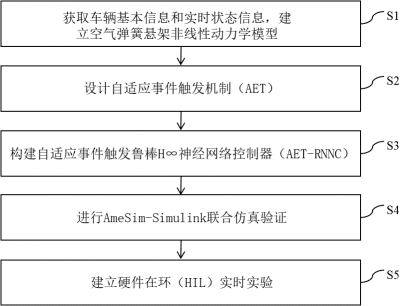
A robust control method for air spring suspension based on adaptive event triggering
一種基於自適應事件觸發的空氣彈簧懸架魯棒控制方法
Publication No.:
CN122275516A
Publication Date:
2026-06-26
Applicant(s):
珠海澳大科技研究院;澳門大學; Zhuhai UM Science & Technology Research Institute (ZUMRI); University of Macau
Inventor(s):
王百鍵;周復求;趙晶;高智江; Wang Baijian; Zhou Fuqiu; Zhao Jing; Gao Zhijiang
Technology Field(s):
運輸, 電腦技術 Transport, Computer technology
The present invention discloses a robust control method for an air spring suspension based on adaptive event triggering. The method first constructs a quarter-car air spring suspension dynamic model that takes into account nonlinear gas flow, actuator saturation, and time-varying delay, and employs a generalized fuzzy hyperbolic tangent model (GFH) to approximate the nonlinear force of the air spring with arbitrary accuracy. Next, an adaptive event-triggering mechanism (AET) is designed, which dynamically adjusts the triggering threshold to significantly reduce the switching frequency of the solenoid valve and the communication load on the in-vehicle network. Further, based on Lyapunov stability theory and a robust H∞ control framework, an adaptive event-triggered robust H∞ neural network controller (AET-RNNC) is proposed, which ensures asymptotic stability of the closed-loop system under multiple constraints and satisfies a predetermined H∞ performance index. Finally, validation is performed through AmeSim-Simulink co-simulation and hardware-in-the-loop (HIL) real-time experiments. During height adjustment from 80 mm to -50 mm, the steady-state error is less than ±3 mm, the number of solenoid valve triggering events is reduced by more than 68% compared with conventional time-triggered control, and the root mean square value of vehicle body acceleration is reduced by 18.7%. This method significantly improves the adjustment accuracy, ride comfort, and service life of key components of electronically controlled air suspensions. It is particularly suitable for passenger vehicles, commercial vehicles, and rail vehicles, and has high engineering applicability and potential for mass production.
Publication No.:
CN122275516A
Publication Date:
2026-06-26
Applicant(s):
珠海澳大科技研究院;澳門大學; Zhuhai UM Science & Technology Research Institute (ZUMRI); University of Macau
Inventor(s):
王百鍵;周復求;趙晶;高智江; Wang Baijian; Zhou Fuqiu; Zhao Jing; Gao Zhijiang
Technology Field(s):
運輸, 電腦技術 Transport, Computer technology
The present invention discloses a robust control method for an air spring suspension based on adaptive event triggering. The method first constructs a quarter-car air spring suspension dynamic model that takes into account nonlinear gas flow, actuator saturation, and time-varying delay, and employs a generalized fuzzy hyperbolic tangent model (GFH) to approximate the nonlinear force of the air spring with arbitrary accuracy. Next, an adaptive event-triggering mechanism (AET) is designed, which dynamically adjusts the triggering threshold to significantly reduce the switching frequency of the solenoid valve and the communication load on the in-vehicle network. Further, based on Lyapunov stability theory and a robust H∞ control framework, an adaptive event-triggered robust H∞ neural network controller (AET-RNNC) is proposed, which ensures asymptotic stability of the closed-loop system under multiple constraints and satisfies a predetermined H∞ performance index. Finally, validation is performed through AmeSim-Simulink co-simulation and hardware-in-the-loop (HIL) real-time experiments. During height adjustment from 80 mm to -50 mm, the steady-state error is less than ±3 mm, the number of solenoid valve triggering events is reduced by more than 68% compared with conventional time-triggered control, and the root mean square value of vehicle body acceleration is reduced by 18.7%. This method significantly improves the adjustment accuracy, ride comfort, and service life of key components of electronically controlled air suspensions. It is particularly suitable for passenger vehicles, commercial vehicles, and rail vehicles, and has high engineering applicability and potential for mass production.
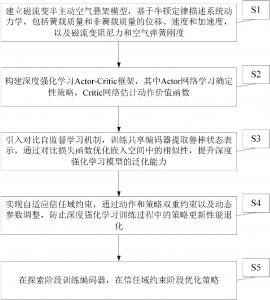
A deep reinforcement learning adaptive control method for magnetorheological semi-active air suspension
一種磁流變半主動空氣懸架深度強化學習自適應控制方法
Publication No.:
CN122275517A
Publication Date:
2026-06-26
Applicant(s):
珠海澳大科技研究院;澳門大學; Zhuhai UM Science & Technology Research Institute (ZUMRI); University of Macau
Inventor(s):
王百鍵;許樂民;高智江;趙晶; Wang Baijian; Xu Lemin; Gao Zhijiang; Zhao Jing
Technology Field(s):
運輸, 電腦技術 Transport, Computer technology
The present invention discloses a deep reinforcement learning-based adaptive control method for a magnetorheological semi-active air suspension, comprising the following steps: S1: establishing a dynamic model of a magnetorheological semi-active air suspension (MRAS), in which the displacement, velocity, and acceleration of the sprung mass and the unsprung mass, as well as the dynamic characteristics of the magnetorheological damping force and the air spring stiffness, are described based on Newton’s laws; S2: constructing a deep reinforcement learning Actor-Critic framework, wherein an Actor network learns a deterministic policy, a Critic network estimates an action-value function, and training is stabilized by a soft update mechanism and target networks; S3: introducing a contrastive self-supervised learning (CSSL) mechanism, in which a shared encoder is trained to extract robust state representations, and the similarity of an embedding space is optimized by a contrastive loss function, thereby improving the generalization capability of the model; S4: implementing an adaptive trust region constraint (ATRC) mechanism, in which degradation of policy update performance during training is prevented through dual constraints on actions and policies and dynamic parameter adjustment; and S5: training the encoder during an exploration stage, optimizing the policy during a trust region constraint stage, and integrating MPC-inspired optimization to ensure satisfaction of physical constraints. Based on deep integration of Actor-Critic and CSSL, and through ATRC and a stage-wise strategy, the method improves training stability and generalization capability of the algorithm under multiple operating conditions, and significantly enhances vibration suppression and ride comfort under complex road conditions.
Publication No.:
CN122275517A
Publication Date:
2026-06-26
Applicant(s):
珠海澳大科技研究院;澳門大學; Zhuhai UM Science & Technology Research Institute (ZUMRI); University of Macau
Inventor(s):
王百鍵;許樂民;高智江;趙晶; Wang Baijian; Xu Lemin; Gao Zhijiang; Zhao Jing
Technology Field(s):
運輸, 電腦技術 Transport, Computer technology
The present invention discloses a deep reinforcement learning-based adaptive control method for a magnetorheological semi-active air suspension, comprising the following steps: S1: establishing a dynamic model of a magnetorheological semi-active air suspension (MRAS), in which the displacement, velocity, and acceleration of the sprung mass and the unsprung mass, as well as the dynamic characteristics of the magnetorheological damping force and the air spring stiffness, are described based on Newton’s laws; S2: constructing a deep reinforcement learning Actor-Critic framework, wherein an Actor network learns a deterministic policy, a Critic network estimates an action-value function, and training is stabilized by a soft update mechanism and target networks; S3: introducing a contrastive self-supervised learning (CSSL) mechanism, in which a shared encoder is trained to extract robust state representations, and the similarity of an embedding space is optimized by a contrastive loss function, thereby improving the generalization capability of the model; S4: implementing an adaptive trust region constraint (ATRC) mechanism, in which degradation of policy update performance during training is prevented through dual constraints on actions and policies and dynamic parameter adjustment; and S5: training the encoder during an exploration stage, optimizing the policy during a trust region constraint stage, and integrating MPC-inspired optimization to ensure satisfaction of physical constraints. Based on deep integration of Actor-Critic and CSSL, and through ATRC and a stage-wise strategy, the method improves training stability and generalization capability of the algorithm under multiple operating conditions, and significantly enhances vibration suppression and ride comfort under complex road conditions.
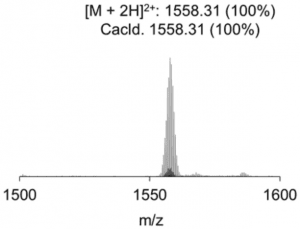
A selenium peptide for activating TNFR2 and its application
一種激活TNFR2的硒肽及其應用
Publication No.:
CN122277671A
Publication Date:
2026-06-26
Applicant(s):
國家納米科學中心;澳門大學; National Center for Nanoscience and Technology; University of Macau
Inventor(s):
王浩;易宇;陳新;陳義博; Wang Hao; Yi Yu; Chen Xin; Chen Yibo
Technology Field(s):
微結構與奈米技術, 生物技術, 製藥 Micro-structural and nano-technology; Biotechnology; Pharmaceuticals
The present invention relates to a selenopeptide capable of activating TNFR2 and the use thereof. The TNFR2-activating selenopeptide comprises, sequentially connected, a tmTNF-targeting peptide, an oligoethylene glycol hydrophilic chain, a selenoamino acid linker, and an alkyl hydrophobic chain. The present invention develops a self-assembling selenopeptide having TNFR2-activating activity. The selenopeptide has functions including inflammation-targeted delivery, oxidation-responsive phase transition, and reactive oxygen species scavenging. In use, the selenopeptide can be pre-assembled to form nanomicelles, which are delivered by intravenous injection and enriched in rheumatoid arthritis inflammatory tissue. In the microenvironment of inflammatory tissue, which is characterized by high surface levels of reactive oxygen species, the selenoamino acid linker can undergo specific cleavage in response to excessive reactive oxygen species expressed in damaged cells. On the one hand, this eliminates reactive oxygen species and reduces oxidative stress; on the other hand, the oxidative metabolite, namely the tmTNF-targeting peptide, can induce liquid-liquid phase separation of tmTNF on the surface of dendritic cell membranes, thereby inducing oligomerization and efficient activation of TNFR2 on the surface of Treg cell membranes, promoting proliferation of Treg cells, and ameliorating rheumatoid arthritis inflammation.
Publication No.:
CN122277671A
Publication Date:
2026-06-26
Applicant(s):
國家納米科學中心;澳門大學; National Center for Nanoscience and Technology; University of Macau
Inventor(s):
王浩;易宇;陳新;陳義博; Wang Hao; Yi Yu; Chen Xin; Chen Yibo
Technology Field(s):
微結構與奈米技術, 生物技術, 製藥 Micro-structural and nano-technology; Biotechnology; Pharmaceuticals
The present invention relates to a selenopeptide capable of activating TNFR2 and the use thereof. The TNFR2-activating selenopeptide comprises, sequentially connected, a tmTNF-targeting peptide, an oligoethylene glycol hydrophilic chain, a selenoamino acid linker, and an alkyl hydrophobic chain. The present invention develops a self-assembling selenopeptide having TNFR2-activating activity. The selenopeptide has functions including inflammation-targeted delivery, oxidation-responsive phase transition, and reactive oxygen species scavenging. In use, the selenopeptide can be pre-assembled to form nanomicelles, which are delivered by intravenous injection and enriched in rheumatoid arthritis inflammatory tissue. In the microenvironment of inflammatory tissue, which is characterized by high surface levels of reactive oxygen species, the selenoamino acid linker can undergo specific cleavage in response to excessive reactive oxygen species expressed in damaged cells. On the one hand, this eliminates reactive oxygen species and reduces oxidative stress; on the other hand, the oxidative metabolite, namely the tmTNF-targeting peptide, can induce liquid-liquid phase separation of tmTNF on the surface of dendritic cell membranes, thereby inducing oligomerization and efficient activation of TNFR2 on the surface of Treg cell membranes, promoting proliferation of Treg cells, and ameliorating rheumatoid arthritis inflammation.