


Forum on Future Service Paradigms of Academic Libraries in the Greater Bay Area Successfully Held at University of Macau (2025-12-12)
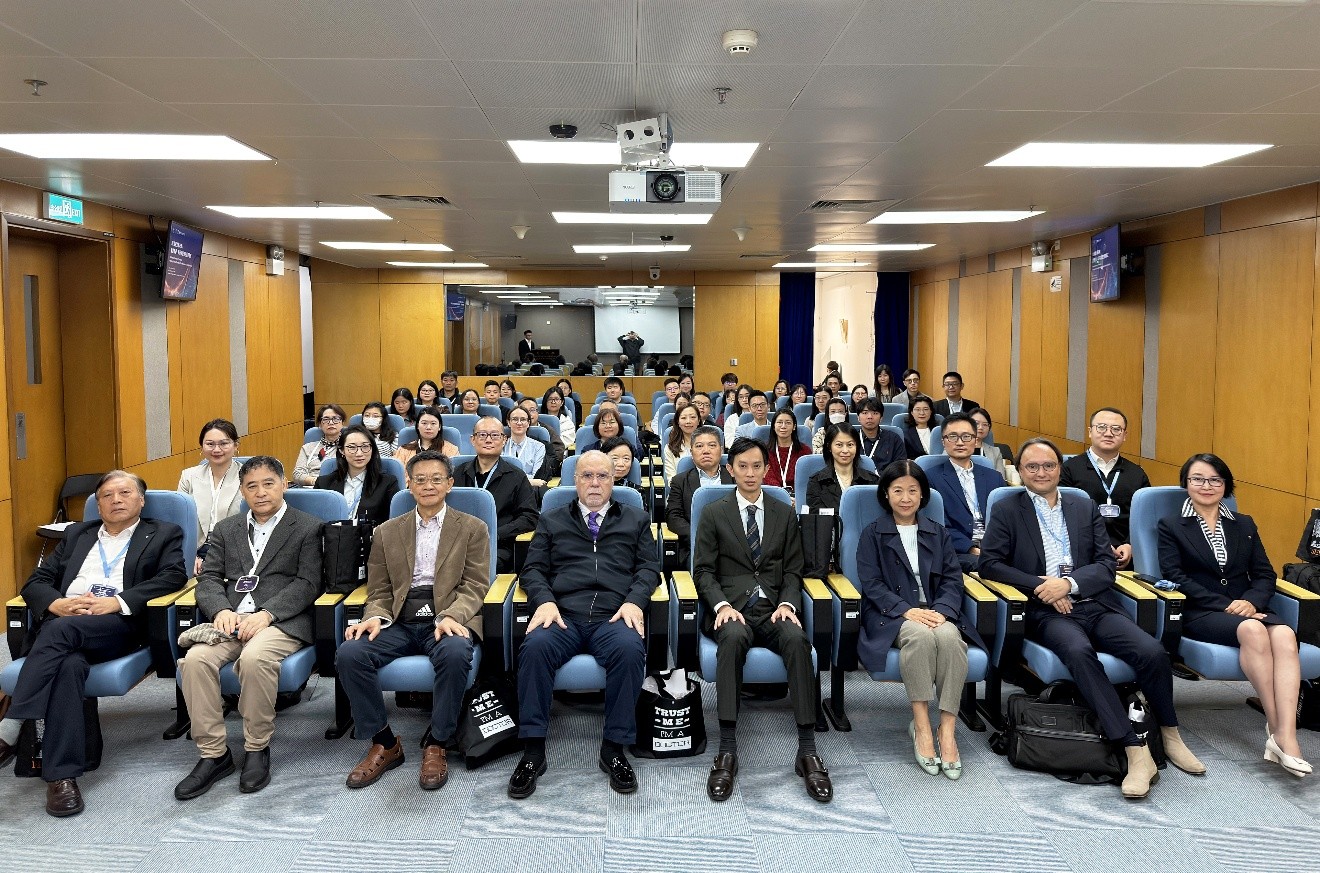
On December 5, 2025, the academic forum “AI-Powered Universities of the Future: Reshaping Service Paradigms in Teaching, Research, and Administration” was successfully held at the Auditorium of the University of Macau Gallery. The event was jointly organized by the University of Macau Library, Elsevier, and China National Publications Import & Export (Group) Corporation (CNPIEC).
The forum invited experts and scholars from the Guangdong-Hong Kong-Macao Greater Bay Area to discuss how artificial intelligence (AI) reshapes university libraries, interdisciplinary research in the humanities, research management services and so on. The aim was to promote interdisciplinary collaboration, optimize talent development in library and information literacy, and explore strategies for research evaluation and knowledge management strategies in the new era.
Professor (Helen) Hong Xu, University Librarian of the University of Macau (UM), delivered an opening remark and welcomed more than 60 participants and guests from universities across Guangdong, Hong Kong and Macao. Distinguished guests included Professor Rui P. Martins, Vice Rector of UM for Global Affairs; Mr. Carlos Roberto Xavier, Head of the Department of Tertiary Education, Education and Youth Development Bureau of the Macao SAR Government; Professor Xingzhong Yu, Dean of the Institute of Advanced Studies in Humanities and Social Sciences and Ms. Cindy Lam, Director of the Alumni and Development Office at UM.
During the forum, Alexander
Van Servellen, Strategic Engagement Manager at APAC, Elsevier, delivered a speech
titled “The New Paradigms: From Silos to Integrated Research &
Innovation Strategy”, emphasizing the importance of integrated data
capabilities and showcasing Elsevier’s databases and platforms in supporting university
development and research acceleration.
Professor Yulin Yuan, Head of the Department of Chinese Language and Literature, Faculty of Arts and Humanities at UM, spoke on “Linguistic Research in the Age of Artificial Intelligence”, raising question that linguistics must reflect on in the era of AI, and introducing the work of the computational linguistics team in recent years, demonstrating a new dimension and possibility of linguistic research in the ear of AI.
Ms. Tina Yang, Associate Librarian for Learning and Research Services, and Mr. Eddie Ko, Law Librarian at the Hong Kong University Library, co-presented “Building Trust in the Age of AI: The Library’s Role in Shaping Ethical Academic Practices”, highlighting that AI has been deeply integrated into academic research and learning, and librarians play a crucial role in guiding the ethnics use of AI, by promoting AI literacy guidelines and policies to ensure the integrity, credibility, and respect of the academic community.
Ms. Liu Xiaoqian, Senior Customer Success Manager at Elsevier, shared a report titled “From Type to Computing: Paradigm Shifts in Knowledge Services and Reshaping the Value if Libraries in the AI era”, pointing out that the wave of scientific paradigm revolution brought about by artificial intelligence poses significant challenges and impacts on libraries, and introduced how Elsevier's AI-powered products and services comprehensively empowers the development of universities and enhance libraries’ capacity to deliver high-value services.
Mr. Yang Guo, Marketing Director of “AI for Science”, CNPIEC Kexin, introduced various ways in which the company leverages AI to enhance service quality, such as enhancing models and algorithms capabilities, integrating resources, and comprehensively building collaborative ecosystem to solve difficulties for enterprises and researchers.
Professor Shoutong Zhu, Librarian Director at Shenzhen University of Advanced Technology, shared the concept and theoretical framework of the fourth-generation library construction, pointing out that the fourth-generation universities are rising in the 21st century, by integrating digital technology, interdisciplinarity, and industrial collaboration to address social challenges and respond to societal needs. The fourth-generation library not only inherits all the functions of the first three generations of libraries, but also develops a three-dimensional service model led by AI, evolving from a traditional knowledge repository into a "Fourth-Generation Intelligent Knowledge Service Center" driven by AI.
Mr. Shuocheng Zhang, Associate Director of Foundation Department, Research Institute of Science, Sun Yat-Sen University, focused on the analysis of collaborative paths between universities and enterprises based on knowledge data networks, and provided insights into the ecological landscape of university scientific research.
The forum facilitated in-depth discussions and exchanges with participating scholars and experts, providing forward-looking perspectives and practical strategies to help university libraries seize the opportunities of digital transformation and address future challenges.